By: KeyCrew Media
If you are shopping for a waterfront property in the Florida Keys and you see the phrase “deep water canal access” in a listing, do not assume you already know what it means. According to Sandy Tuttle, founder of Island Welcome Real Estate in the Lower Florida Keys, that phrase is one of the most misunderstood pieces of language in the entire Keys market – and buying a home based on a misread of it can be an expensive mistake.
Tuttle has spent 22 years buying, selling, and navigating the waters of the Florida Keys. She lived aboard a sailboat for five years before getting her real estate license and has spent her career helping buyers understand what waterfront access actually delivers versus what the listing says.
“Every time I do a deal, I learn something new that I need to share with buyers,” she said. “It always comes from the after events – throughout the process, I pick up a new question I need to ask.” At Island Welcome Real Estate that kind of hard-won detail is built into every buyer conversation from day one.
“Deep Water” Is Relative to the Florida Keys, Not Anywhere Else
In a market like Fort Lauderdale, where canals accommodate mega yachts and cruise ships, deep water means something completely different. In the Florida Keys, the average controlling depth for a canal-front property is about three feet. Two feet is considered a shallow draft. One foot is very shallow, and zero essentially means no boat – maybe a kayak.
When a Keys listing says “deep water access,” it is referencing four to six feet of controlling depth. That is deeper than average for this market. It does not mean unlimited draft clearance, and it does not mean a sailboat with a 10-foot keel can navigate freely. “Deep water in the Keys is relative to what we are used to,” Tuttle explained. “It does not mean you could have a sailboat with a 10-foot centerboard.”
The Canal Behind the House Is Not the Number That Matters
This is where buyers make their biggest mistake. You can stand on a dock, look into the canal behind a home, and see water that is 10, 12, or even 18 feet deep. That looks impressive. The problem is that the number tells you almost nothing about whether you can actually get your boat out.
The canals behind Florida Keys homes were artificially dredged and cut, often decades ago. They are man-made. But at the point where the neighborhood connects to the natural seafloor and the main boating channels, the depth changes – and that is where the true controlling depth comes in. “At some point, they only let developers go so far out into the natural seabed,” Tuttle said. “Where your neighborhood connects to the main boating channel, that is where you see the substantial change.”
The number buyers need to ask for is the controlling depth: the shallowest point between the dock and the navigable water that gets you to the ocean, the reef, or the backcountry. That field should appear in the listing. If it does not, ask before you book a showing.
Real Consequences When Buyers Skip This Step
Tuttle has seen this play out in ways that cost buyers real money. One buyer purchased a property on Cudjoe Key with a disclosed two-to-three-foot controlling depth. The seller recommended keeping any vessel under two feet of draft. The buyer brought in an inboard cabin cruiser, navigated in on a high tide, and then tried to leave on a low tide. The lower unit of the boat was destroyed.
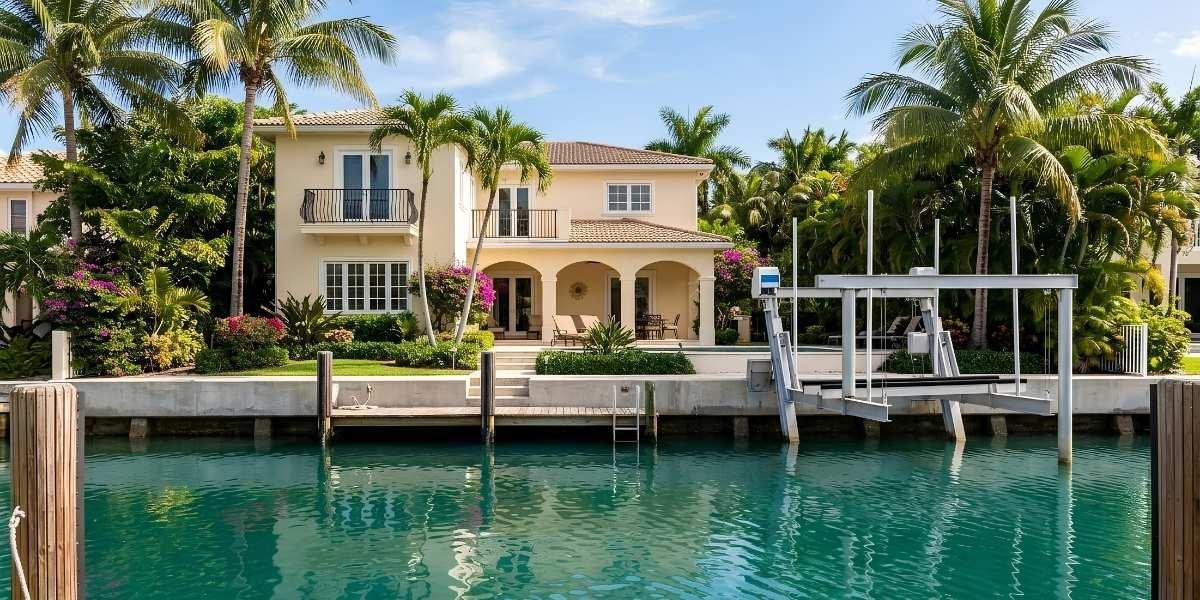
In a separate situation, a buyer in Key Largo inherited a 10,000-pound boat lift with the property and assumed it could handle their vessel. It could not. The lift collapsed under the weight. “Never push the weight of your vessel onto a boat lift with a lower rating,” Tuttle said. “Have someone from a boat lift company come out and confirm whether that system is going to work for your existing boat.”
Boat Size Has Changed – and Most Buyers Do Not Realize It
Boating expectations in the Keys have shifted significantly in the past decade. What used to be a standard Keys boat – a 28-footer with two engines – is now considered modest. Today, 38- to 42-foot center consoles with three or four engines are common at fuel docks. That change matters for canal width, not just depth.
Monroe County limits how much of a canal’s width can be occupied by a dock and vessel. On a 60-foot canal, a buyer has roughly 15 feet to work with. Wider boats, catamarans, and boats with towers introduce constraints that go beyond depth alone. Sailboat keels, outriggers, and fixed towers can also rule out properties with neighborhood bridges in the canal system – a detail that will not appear in a standard online search.
“Discussing someone’s boating goals is absolutely part of the conversation from the beginning,” Tuttle said. “What boat you have, what boat you hope to have – that impacts every area of focus when we are searching.”
What to Ask Before You Request a Showing
If you own a boat or plan to, the standard listing fields are not enough. Before you schedule a visit to any waterfront property in the Florida Keys, ask your agent for the controlling depth from the dock to the main channel, the canal width, and whether it can accommodate your vessel and docking setup, whether there is a neighborhood bridge that would restrict clearance, and whether the existing boat lift – if there is one – is rated for your boat’s weight.
These are questions that a generalist agent may not be able to answer. They require someone who knows the water as well as the listings. You can browse current waterfront properties in the Florida Keys to start getting a sense of what is available, but before you make any decisions, connect with a local expert who can walk you through the real access details on each property.
About Sandy Tuttle: Sandy Tuttle is the founder/owner of Island Welcome Real Estate, a boutique luxury waterfront real estate firm based in the Lower Florida Keys. With 22 years of experience in the Keys market, Sandy specializes in waterfront and canal-front properties for buyers relocating from across the country.
Disclaimer: This article is based on information provided by the expert source cited above. It is intended for general informational purposes only and does not constitute legal, financial, or real estate advice. Readers should conduct their own research and consult qualified professionals before making any real estate or financial decisions.