By Camille Ortega
For a generation, residential due diligence followed a familiar checklist: school zones, flood maps, tax assessments, comparable sales. Two variables have since forced their way onto that list, and neither shows up cleanly in a listing sheet. The first is proximity to heavy freight. The second is proximity to a data center.
Both are byproducts of the same economic shift, a logistics-and-computation buildout concentrating enormous industrial load into corridors that were, until recently, ordinary residential geography. Both are now measurably affecting what property is worth and how comfortably people can live on it.
The Corridor Discount
Warehouse and distribution submarkets have been among the strongest performers in commercial real estate for a decade, and the residential neighborhoods that ring them have absorbed the consequences. Interstate 75 is among the busiest north-south trucking arteries east of the Mississippi. Interstate 16 is the only direct highway link between Atlanta and the Port of Savannah. Where those corridors converge in Middle Georgia, the traffic load reads clearly in the safety data: Bibb County recorded more than 6,000 crashes in 2024, and Macon ranks fourth nationally for fatal crash rate per capita.
The physics behind those numbers is unforgiving. A fully loaded tractor-trailer can weigh up to 80,000 pounds against roughly 3,500 for a passenger car, and needs about 525 feet to stop from highway speed. For a subdivision whose only egress is a two-lane road feeding an interstate on-ramp, that asymmetry is a daily condition, not an abstraction. Appraisers have long discounted for highway noise. The newer conversation among buyers is about ingress-and-egress safety, where the school bus turns, where residents merge, how far the nearest trauma center sits.
The Data Center Question
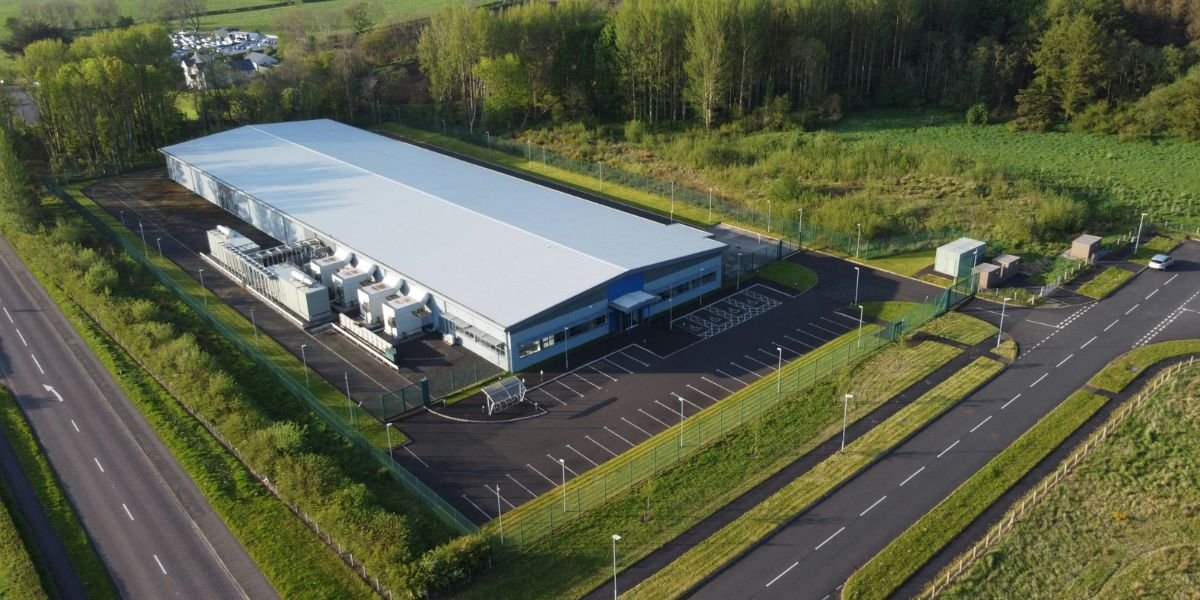
Data centers arrived in many communities as an unambiguous fiscal win: enormous capital investment, substantial property tax base, minimal school-enrollment impact. The livability picture has proven more complicated.
The core complaint is acoustic. Large facilities run cooling infrastructure continuously, producing a persistent low-frequency hum that behaves differently from traffic noise; it does not taper overnight, and low frequencies penetrate standard residential construction that handles higher-pitched sound well. Adjacent homeowners report sleep disruption, and the effect on marketability can be immediate.
The financial exposure is now well enough documented to be underwritten. Property value diminution in affected areas commonly runs in the range of 5 to 20 percent of pre-construction value, while acoustic mitigation, sound barriers, window and wall upgrades, has been estimated at roughly $25,000 to $150,000 per household. Legal guides describing what damages can be recovered in a data center nuisance lawsuit note that mitigation costs are generally treated as separately recoverable from diminution itself, and that a facility’s compliance with local zoning and noise ordinances does not by itself defeat a private nuisance claim; the governing standard is substantial and unreasonable interference with the use of property.
Timelines matter for anyone weighing whether to sell, stay, or litigate. Practitioner accounts of how a data center noise lawsuit proceeds from filing to trial describe a process that typically spans 18 to 36 months and turns heavily on the first thirty days, acoustic measurement taken before conditions change, and preservation demands served before operational records are overwritten. More than 90 percent of civil cases resolve before trial, but the leverage that produces a resolution is usually built early.
What Owners Still Carry
Industrial neighbors do not displace the ordinary liabilities of property ownership. Landlords, property managers, and commercial operators remain responsible for conditions on their own premises, and the economics of that exposure are frequently underestimated. Georgia premises cases range from modest to extraordinary; published discussions of average slip and fall settlement amounts in Georgia cite outcomes from a few thousand dollars to an eight-figure verdict in a catastrophic-injury case, driven largely by injury severity and the quality of the negligence evidence.
Two Georgia rules shape nearly every outcome. Under O.C.G.A. § 51-12-33, a party found 50 percent or more at fault recovers nothing, a hard cutoff that makes fault allocation the decisive question. And O.C.G.A. § 9-3-33 sets a two-year limitations period for personal injury claims. Injured parties often compromise their own position long before either rule is applied; summaries of the common mistakes to avoid before hiring a Macon injury lawyer point to recorded statements given without counsel, gaps in medical treatment, and social media activity as the most frequent self-inflicted damage.
For buyers, the practical additions to due diligence are cheap relative to the risk: pull the county’s industrial and data center permit filings, not just current zoning; visit the property after 10 p.m. rather than at midday; check the traffic pattern at the nearest interstate access point during peak freight hours. Documentation of baseline conditions before an adjacent facility comes online is worth more later than almost anything gathered afterward.
Disclaimer: The content in this article is provided for general knowledge. It does not constitute legal advice, and readers should seek advice from qualified legal professionals regarding particular cases or situations.