By: KeyCrew Media
Brokerages have spent more than a decade buying software to fix a problem that is not, at its root, a software problem. The CRM is not underused because it is badly designed. It is underused because the work of filling it happens at the end of a long day, after the last showing, when the agent is in the car, and the notes are still in their head.
The industry’s response has been mostly structural. Teams have tied commission splits to data entry, assigned transaction coordinators to do the logging, and run quarterly cleanups on databases that decay faster than they can be repaired.
“You ask everybody about the CRM, and the biggest problem is user adoption,” said John LeRoy, a longtime entrepreneur who now runs Tovel AI, a company building tools aimed at that gap. “Companies will change their compensation plan to drive CRM adoption.”
What Gets Lost Between the Appointment and the Entry
The cost of an incomplete record is unusually high in residential real estate, because the details that matter most are the ones least likely to be written down. A buyer mentions in passing that the commute matters more than the square footage. A seller says they cannot close before their daughter finishes the school year. A repeat client’s spouse changed jobs.
None of that fits neatly into a field. Most of it is captured, if at all, in a note the agent writes from memory three days later.
The transaction cycle compounds it. A homeowner may buy twice in a lifetime, and the relationship an agent maintains in the gap runs almost entirely on recall, which is why the industry has always treated a good memory as a professional asset rather than a personal trait.
“We’ve all praised the person who can remember everybody’s name, what an exceptional person they are,” LeRoy said. “That’s recall. That’s a gift.”
The Category Is Shifting Toward the Conversation
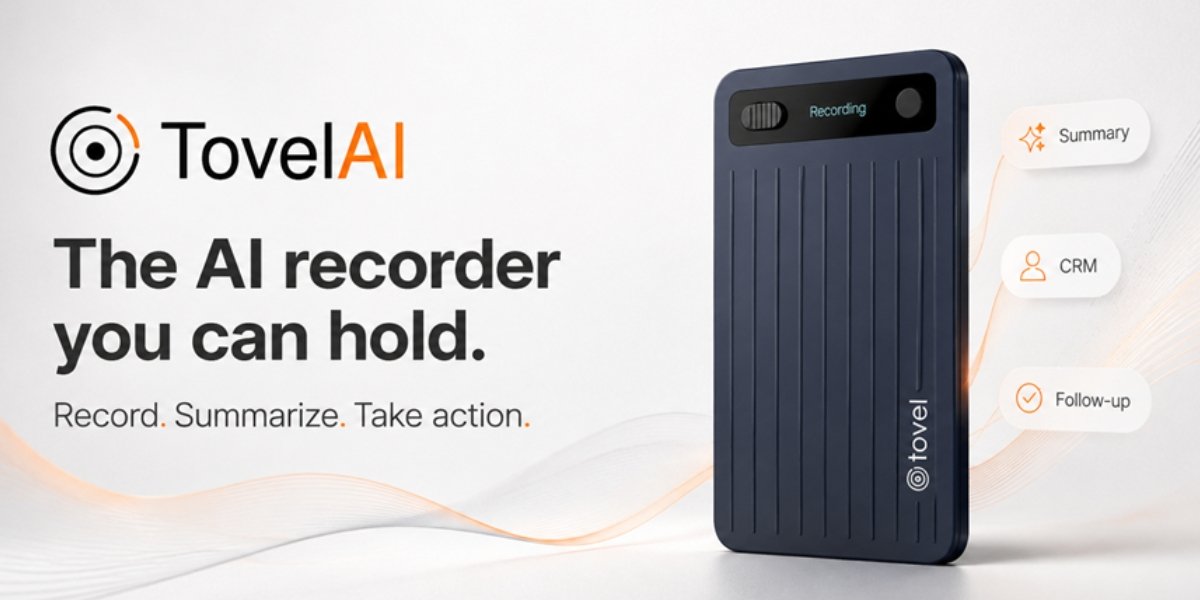
The tools now entering the market are aimed at the conversation itself rather than the database. AI recorders have largely converged on a standard output of transcript plus summary. The newer development is products that prepare the CRM work directly: a contact record with the fields populated, a follow-up task with a date, a note attached to the right property file, presented to the agent for approval before anything is written.
Tovel, which announced a September 15 launch, groups those conversations into project files, so every discussion tied to a listing or a client sits in one searchable history. Its connections include HubSpot, Follow Up Boss, BoldTrail, Realay and GoHighLevel, which are available at launch, with several other CRM platforms in development.
The approval step is deliberate. Nothing is created until the agent reviews the destination and the mapped fields and confirms it, a design choice that also functions as a check on the accuracy of the extraction.
The Compliance Question Agents Should Ask First
Recording a client conversation raises a question the CRM never did. Consent law varies by state, and the agent, not the vendor, carries the obligation. In all-party consent states, recording a kitchen-table conversation without asking is a legal exposure, not an etiquette lapse.
Some tools now prompt participants to state their consent aloud before recording continues, and store that with the file. Brokerages considering these products at a team level will need a policy before they need a purchase order, one covering which conversations may be recorded, who can access the recordings, and how long they are retained.
That work is not glamorous. But it is the part that determines whether a tool aimed at the follow-up gap actually closes it, or simply relocates the risk.
About the Expert
John LeRoy is Co-Founder and CEO of Tovel AI. Over a career spanning more than 35 years, he has founded, scaled, and sold companies across health care, consumer products, and technology. His work focuses on sales operations and the tools client-facing professionals use to manage client relationships and follow-up.