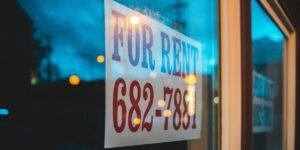
When Home Stops Feeling Safe
A home is supposed to be the one place where a person can breathe. It is where the day ends, where the noise of work slows down, and where life feels a little more stable. But when money problems begin to grow, even the home can stop feeling safe.
In Craig E Parks’ story, the pressure around his home does not appear suddenly. It builds slowly. First, work becomes uncertain. Then income becomes harder to rely on. Then the bills continue to arrive. Then the mortgage remains due, even while everything else in life is changing.
This is what makes financial stress so heavy. It does not stay on paper. It follows a person into the house. It changes the way every room feels. The place that once gave comfort can begin to feel like a reminder of everything that might be lost.
The House Behind the Pressure
Before the financial collapse became serious, Craig had built a life that seemed to have direction. He was involved with Hollywood Moguls, a creative space focused on art, theater, food, performance, and entertainment. He had also been doing construction work. His life was active, busy, and full of movement.
Away from the business side of things, he also had a home. The original manuscript mentions the house he was buying in West LA, a small bungalow-type home with enough room for him and his dog, Bossco. That detail matters because it shows the house as more than property. It was part of his personal life. It gave him a place outside the noise of Hollywood, a place that belonged to his private world.
In real estate terms, a house is often treated as an asset. It has a mortgage, value, payments, and paperwork. But in real life, a house is emotional. It represents progress. It tells a person, “You are building something.” That is why the threat of losing it can feel so personal.
When Income Changes but the Mortgage Does Not
One of the clearest real estate lessons in Craig’s story is simple: life can change quickly, but the mortgage does not wait.
Craig’s situation begins to shift after a serious accident at Hollywood Moguls. He falls from scaffolding during theater work and injures himself badly. His knees swell, his movement becomes limited, and his ability to work is affected. At the same time, he is dealing with problems connected to the business and with the income he had expected but could not fully rely on.
Craig had only about a month of savings. Once he saw that number, every decision started to feel more serious. He could no longer think about growth or expansion. He had to think about how long he could hold everything together before something gave way.
That is exactly how financial stress turns a home into a breaking point. The house may still be standing. The rooms may look the same. The door may still open. But the person inside knows the numbers are changing. The safety is no longer certain.
The Bills Did Not Pause
When someone loses income, even for a short time, they may hope life gives them room to recover. But bills do not usually work that way. The mortgage remains. Utilities remain. Repairs remain. Food, transportation, and daily costs remain.
In Craig’s case, the bills did not pause. The mortgage was still there, and the responsibility of maintaining the house did not disappear just because his access to work had changed. This captures the real estate pressure very well. A home can be deeply personal, but it is also a financial responsibility that keeps moving, no matter what else is happening.
At first, Craig tried to manage what he could. He made payments where he was able. He stretched what he had. He tried to keep things steady while he figured out his next move. That is what many people do when housing pressure begins. They do not immediately give up. They adjust. They delay. They hope the next job, the next payment, or the next opportunity will give them enough time to recover.
But that only works for so long when income is not coming in clearly.
When the Gap Becomes Too Wide
Financial stress becomes dangerous when the gap between money coming in and money going out becomes too wide. At that point, a person is no longer simply managing a problem. The problem starts with managing them.
Craig’s story shows this clearly. The pressure did not come from only one place. He was dealing with business conflict, physical pain, delayed work, unpaid money, and the ongoing cost of keeping his home. Each issue added another layer.
This is why housing problems often feel so overwhelming. A person may not be facing foreclosure because of one careless decision. It may be because several parts of life broke down at once. One injury affects work. One business issue blocks income. One unpaid job creates a shortage. One month of savings disappears faster than expected. Then the mortgage becomes harder to carry.
The home becomes the center of all that pressure because it is usually the largest and most important payment.
The Notices Begin to Arrive
There is a particular kind of fear that comes with official notices. They turn private worry into something visible. Before the notice arrives, a person may still hope things can be fixed quietly. Once the notice appears, the problem feels more real.
The notices began to come steadily. Each one carried more weight. Each one made it harder for Craig to believe the situation could be stabilized quickly. By the time the eviction notice came in July, the truth could no longer be ignored. The life he had been holding onto was no longer secure.
It shows how a house can shift from a home to a countdown. Every notice becomes a reminder that time is running out. Every envelope can feel like another piece of safety being taken away.
More Than a Property Problem
Foreclosure or eviction is never only about property. It affects the body, the mind, and the way a person sees the future. When the place where someone lives becomes uncertain, everything else becomes harder to handle.
Craig’s story shows that the pressure was no longer just about the business. It became about everything. The house, the car, the income, and the sense of control all started to weaken together. The pressure moved beyond numbers. It showed up in what he could see and what he had worked for.
That is why housing stress can feel so personal. Losing a home means losing more than walls. It can feel like losing proof that your work mattered. It can feel like losing the life you were trying to build.
The Emotional Weight of Foreclosure
Foreclosure can make a person feel trapped between the past and the future. The past says, “I worked for this.” The future says, “I may not be able to keep it.” That emotional conflict is painful.
Craig’s home had meaning because it represented stability during a busy and creative season of life. But when financial pressure grew, the home became part of the collapse. The mortgage did not care that he was injured. The notices did not care that he was trying. The payment schedule did not care that he was under pressure.
That is the hard truth of real estate stress. A home can be warm, personal, and full of memories, but it is also tied to deadlines, payments, and legal processes. When those payments cannot be met, the home’s emotional value does not stop the pressure from mounting.
What Craig’s Housing Struggle Leaves Behind
Utopia’s Unfinished Pyramid does not portray Craig E. Parks’ housing struggle as merely a real estate problem. It offers something deeper: a clear look at what happens when the place meant to provide safety begins to carry the weight of fear, debt, deadlines, and uncertainty. It shows how a home can slowly change from a private space of comfort into a daily reminder of everything a person is trying not to lose.

Craig’s story matters because it captures the emotional side of foreclosure and housing pressure. The issue was not only the mortgage. It was the injury that interrupted his income, the business instability that weakened his control, the limited savings that disappeared too quickly, and the notices that made the threat feel real. His home was not just a property. It was proof of effort, progress, and the life he was trying to hold together.
And most importantly, this part of Craig’s journey shows that losing financial stability can make even the most familiar place feel uncertain. When the bills do not pause, when the notices keep arriving, and when the future starts to feel smaller, a home can become the center of a much larger struggle. That is where this story leaves its strongest mark. It does not only speak about real estate. It speaks about safety, pressure, and the painful moment when someone realizes that the life they built is no longer fully in their hands.