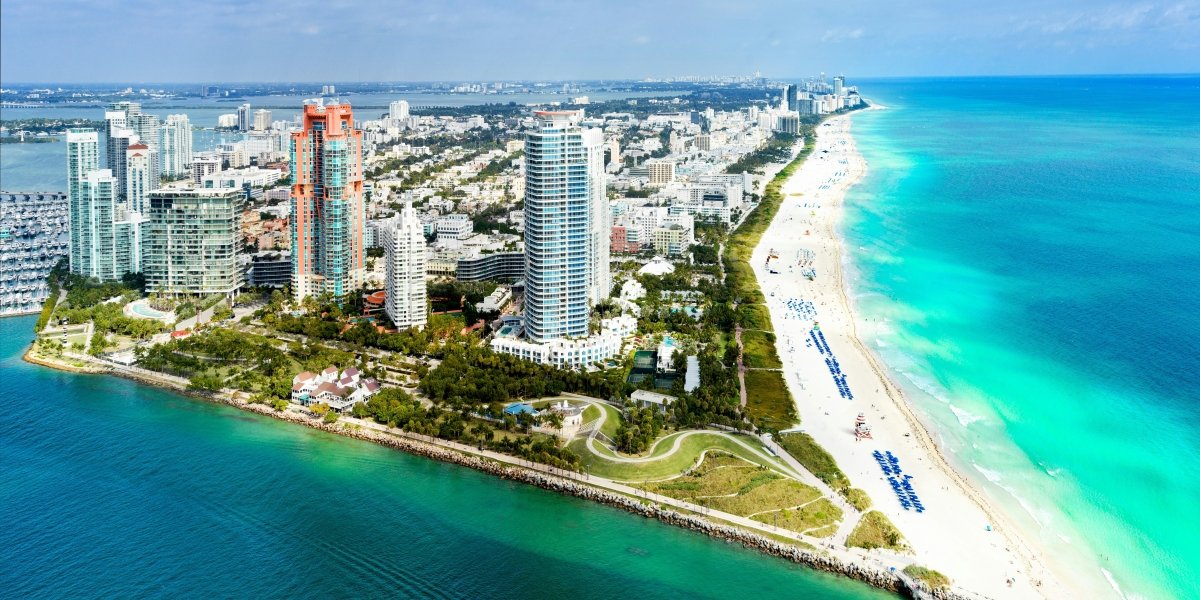
South Florida has long been one of the most active real estate markets in the United States, and the reasons go far beyond the sunshine and beaches. From Miami-Dade to Broward and Palm Beach counties, the region offers a rare combination of economic strength, population growth, tax advantages, and lifestyle appeal that continues to attract investors from around the world.
No State Income Tax
One of the most notable financial features of investing in Florida is the absence of a state income tax. For investors and landlords generating rental income, this can translate into meaningful annual savings compared to states like New York, California, or New Jersey. Florida’s tax-friendly environment extends to corporations as well, making it an attractive base for business owners who want their real estate and their operations in the same jurisdiction.
Population Growth That Doesn’t Stop
South Florida is one of the fastest-growing regions in the country. Domestic migration from high-tax northern states, combined with steady international immigration (particularly from Latin America and the Caribbean), keeps demand for housing consistently high. More people means more renters, more buyers, and more upward pressure on property values. Unlike many Sun Belt markets that experienced dramatic post-pandemic corrections, South Florida’s population-driven demand has provided a durable floor under prices.
A Thriving Rental Market
With homeownership costs elevated and a large transient population of seasonal residents, young professionals, and newcomers still establishing roots, South Florida supports an active rental market. Cities like Fort Lauderdale, Boca Raton, and the broader Broward County area (including communities like Margate, Coral Springs, and Pompano Beach) offer investors a range of options for long-term tenant placement. Short-term rental activity through platforms like Airbnb and Vrbo is also common in beach-adjacent and tourist-frequented neighborhoods. You can read more about South Florida Airbnb investing at SoFloHomeListings.com, which covers the operational considerations involved with this type of property.
International Demand and Global Appeal
Few American real estate markets attract the level of international interest that South Florida does. Buyers and investors from Brazil, Colombia, Venezuela, Argentina, Canada, and Europe have long viewed Miami and its surrounding region as a safe harbor for capital. It is politically stable, dollar-denominated, and highly liquid compared to many foreign alternatives. This international demand creates a resilient buyer pool that insulates the market during periods of domestic economic uncertainty.
Infrastructure and Economic Diversification
South Florida is no longer simply a tourism economy. The region has evolved into a major hub for finance, technology, healthcare, logistics, and international trade. The relocation of major financial firms and tech companies to Miami over the past several years has brought high-earning professionals who drive demand for quality housing across all price points. Port Everglades in Fort Lauderdale remains one of the busiest ports in the Western Hemisphere, supporting a large logistics sector that keeps blue-collar rental demand healthy as well.
Year-Round Appeal and Lifestyle Premium
Properties in South Florida carry a lifestyle premium that translates directly into value stability. The ability to offer tenants or buyers warm weather year-round, proximity to beaches, world-class dining, and international airports makes South Florida properties easier to lease and easier to sell than comparable assets in less desirable climates. This lifestyle factor also supports the luxury segment, where demand from wealthy domestic and international buyers has pushed waterfront and high-rise condominium prices to record levels.
Homestead Exemption and Property Tax Benefits
Florida’s homestead exemption offers primary residents meaningful property tax relief, and the Save Our Homes cap limits annual assessment increases to 3% for homesteaded properties. This provides protection against runaway tax bills in a rising market. For investment properties, while the homestead exemption does not apply, Florida’s overall property tax rates remain competitive compared to many northeastern states.
Strong Appreciation History
Over the long run, South Florida real estate has demonstrated consistent appreciation. While no market is immune to cycles, the combination of land scarcity (South Florida is bounded by the Atlantic Ocean to the east and the Everglades to the west) and persistent demand creates structural support for prices. Investors who have held South Florida properties through multiple market cycles have historically participated in the region’s long-term price growth.
Tourism and Short-Term Rental Activity
South Florida draws tens of millions of visitors annually. Fort Lauderdale’s beaches, the Florida Keys, Palm Beach’s cultural scene, and Miami’s international profile all generate substantial short-term rental demand. Investors who acquire properties in the right zip codes and work within local STR regulations may find higher nightly rates than comparable long-term leases, particularly during winter months when northern visitors travel south.
The Bottom Line
South Florida real estate offers investors a rare convergence of tax efficiency, demographic tailwinds, international demand, economic diversification, and lifestyle-driven value. Whether your strategy is buy-and-hold for long-term appreciation, long-term rental, short-term vacation rentals, or commercial development, the South Florida market provides the conditions and the fundamentals to support a wide range of investment approaches.
For those willing to do their due diligence, understand local market nuances, and think with a long-term horizon, South Florida remains one of the most active real estate investment destinations in the United States, and that is unlikely to change anytime soon.