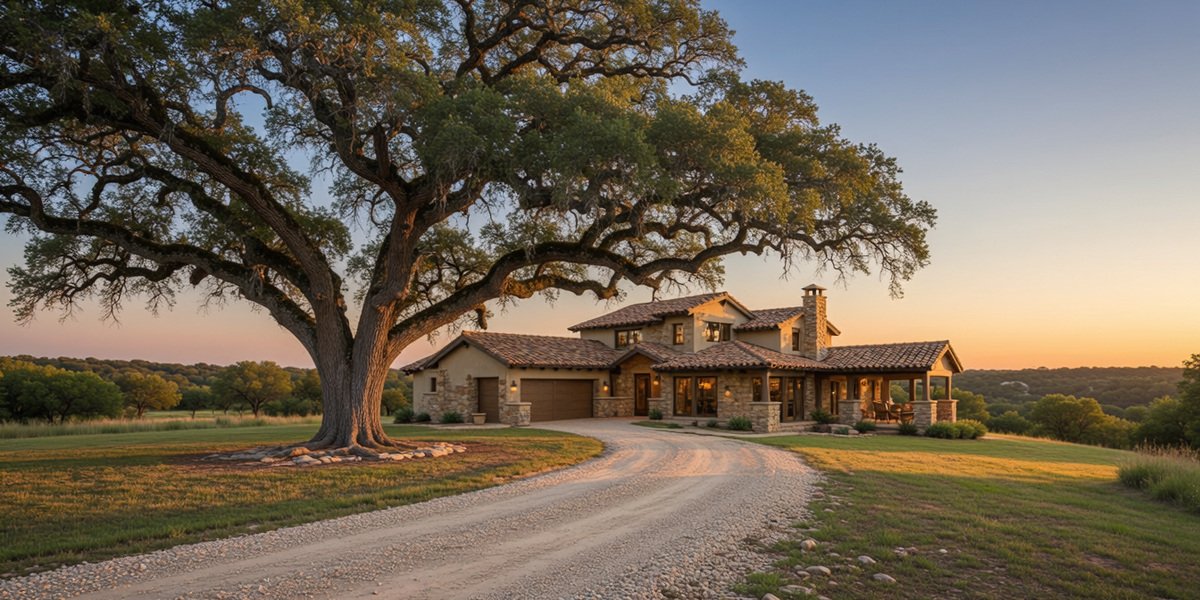
Homesites of one acre or more are a big part of what draws buyers to Georgetown, Texas, and nearby Liberty Hill. Realtor Tanya Kerr of T Kerr Property Group says most acreage buyers are after the same thing: more privacy and more space.
“Acreage buyers don’t want to look into a neighbor’s window or feel like they’re sharing a backyard,” Kerr says. On larger tracts, some buyers also look into an agricultural exemption to help with property taxes. But acreage comes with costs, paperwork and financing questions that a typical neighborhood purchase doesn’t.
What Acreage Owners Don’t Always Expect
The extra space is the point, but Kerr says it changes day-to-day life in ways some buyers don’t plan for:
- More maintenance. More land means more mowing and more upkeep.
- Higher water bills. There’s usually more landscaping to maintain and keep alive.
- More wildlife. Acreage properties tend to sit in more rural settings, so expect more bugs, scorpions, rabbits and other critters.
What To Check Before You Make An Offer
Kerr recently helped a buyer evaluate a land purchase. The buyer wasn’t planning to pull the deed restrictions, but Kerr pulled them before an offer went in. They showed that the current owner had full easement access to drill or explore for minerals on the property at any time.
That’s why Kerr’s due diligence for acreage buyers starts before the offer, not after. Her checklist includes:
- Deed restrictions, to understand how the property can be used and who else has rights to it.
- A survey, to identify any encroachments or easements.
- Internet access, since speed options can be limited in more rural areas.
- Utilities. Is there a water line nearby, or would you need to drill a well? Is there a sewer line, or would you need a septic system?
- Floodplain status. Kerr says the area is seeing more flooding, so it’s important to understand a property’s flood risk.
- Access to major roadways, for the drives you’ll make every day.
Building On Land Or Buying An Existing Home
Buyers who want to build start by buying and closing on the land. Many then use a construction loan, where the builder draws funds as the home goes up. The buyer pays interest on those draws as well as the payment on the land loan.
Building on acreage typically takes about a year, which creates another risk: buyers won’t know the rate on their permanent loan until the home is finished.
“Construction financing can become very costly,” Kerr says. “Buyers need to understand how a construction loan works before they commit to building.”
Buying an existing home on acreage is simpler. There’s one loan with known terms, and the home is already built. The trade-off is that it may have been custom built for the seller, so it may not be exactly what you would have designed.
For homes on acreage, financing generally works the same as any other purchase. Conventional and VA loans can both be used at the luxury level, and Kerr is seeing many luxury buyers pay cash. For raw land, she recommends a lender who specializes in land purchases rather than a standard residential lender.
About T Kerr Property Group
T Kerr Property Group is a real estate team founded by Tanya Kerr, serving Georgetown, Round Rock, Liberty Hill, and the greater Williamson County and Central Texas market. The team focuses on luxury homes, 1+ acre homesites, and buyers relocating to the area, and is affiliated with Keller Williams Realty Lone Star.
This article is based on information provided by the expert source cited above. It is intended for general informational purposes only and does not constitute legal, financial, or real estate advice. Readers should conduct their own research and consult qualified professionals before making any real estate or financial decisions.