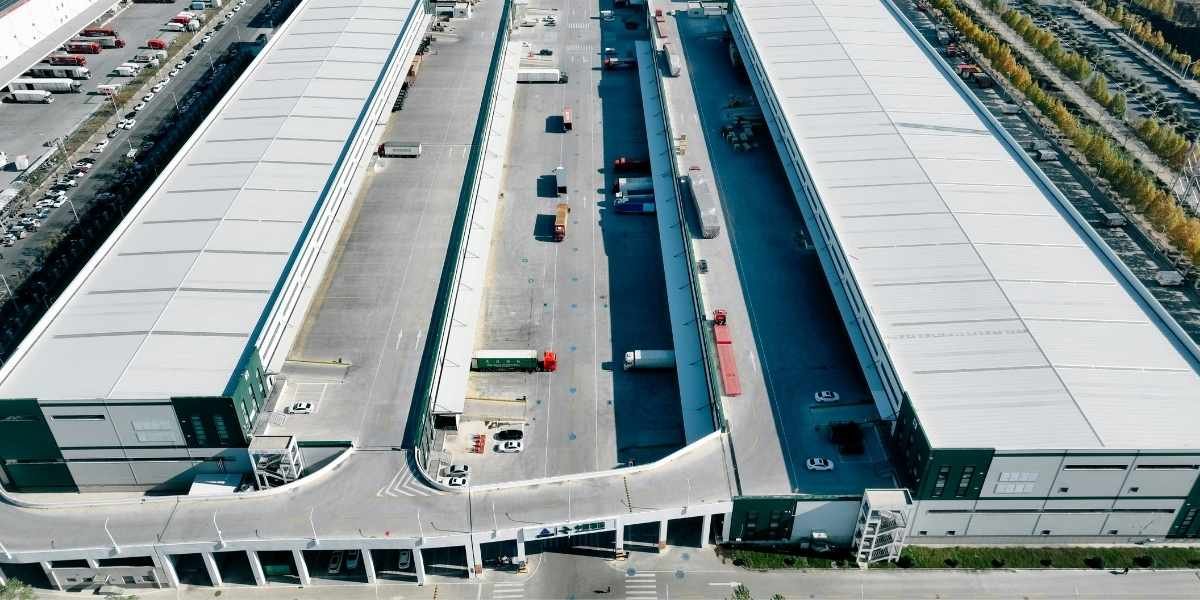
Data center real estate demand is expanding beyond specialized facilities as construction activity increases across the United States. CoStar reported that data center-adjacent occupiers accounted for more than 6% of leasing activity at logistics properties within five miles of data centers in 2026, compared with less than 3% in 2020.
Key Takeaways
- U.S. data center inventory has reached roughly 69 gigawatts of existing capacity.
- Another 43 gigawatts of data center capacity is under construction.
- Data center-adjacent occupiers accounted for more than 6% of leasing activity at nearby logistics properties in 2026.
- The comparable share was less than 3% in 2020.
- Construction firms, power and cooling equipment suppliers, operators and IT infrastructure providers are among the businesses leasing nearby industrial space.
U.S. Data Center Capacity Reaches 69 Gigawatts
Data center real estate is generating additional industrial demand as the amount of computing infrastructure operating and under construction in the United States expands. CoStar reported August 26 that national data center inventory had reached roughly 69 gigawatts of existing capacity, with another 43 gigawatts under construction.
The figures cover data center capacity rather than the physical square footage of the buildings themselves. Gigawatts measure electrical capacity, making the metric particularly relevant to facilities that require substantial power to operate computing equipment, cooling systems and related infrastructure.
CoStar also reported that hyperscale facilities account for 64% of existing data center capacity. Hyperscale facilities are large-scale sites designed to support substantial computing operations, including infrastructure used by major cloud providers and other large technology users.
The scale of existing and planned capacity is directly connected to the industrial real estate market because data centers require supporting businesses and physical infrastructure during both construction and operation.
The industrial demand identified by CoStar is concentrated near data center facilities. Logistics properties within five miles of data centers are attracting businesses connected to construction, equipment, operations and information technology.
That geographic relationship provides a specific measure of the connection between data center development and surrounding industrial property demand. The activity is not limited to companies occupying data center buildings themselves.
The relationship between industrial property and logistics activity also appears in recent coverage of commercial property demand, including U.S. commercial real estate demand, which examines industrial conditions alongside other major commercial property sectors.
Data Center Construction Adds 43 Gigawatts Under Development
The 43 gigawatts of capacity under construction represent a substantial amount of data center infrastructure being developed in the U.S. market. CoStar’s report connects this construction activity with demand from businesses that support the development and operation of these facilities.
Construction companies are among the categories of data center-adjacent occupiers identified in the report. Their industrial space requirements can include locations for materials, equipment and other resources associated with large-scale construction projects.
Power and cooling equipment suppliers are another category identified by CoStar. Data centers require electrical infrastructure and systems to manage heat generated by computing equipment, creating demand for businesses that provide equipment and services connected to those requirements.
Operators and information technology infrastructure providers also contribute to the surrounding industrial demand. These businesses form part of the supply chain supporting data center facilities rather than simply occupying space inside the facilities.
The distinction matters for industrial real estate because a data center project can generate property demand beyond the parcel on which the main facility is located. Businesses supporting construction and operations can require logistics and industrial space within the same broader market.
CoStar reported that operators are prioritizing locations with access to electrical generation, substations and transmission infrastructure. Those requirements influence the locations selected for data center capacity and the industrial markets surrounding the facilities.
The location requirements of industrial users can also vary by property type and business activity. Recent reporting on Southeast logistics real estate provides additional context on logistics facilities used for transportation, warehousing and distribution operations.
Nearby Logistics Properties Capture More Data Center Demand
The share of leasing activity connected to data center-adjacent occupiers has increased substantially in properties located close to data center facilities. CoStar reported that these occupiers accounted for more than 6% of leasing activity across logistics properties within five miles of data centers in 2026. The corresponding share was less than 3% in 2020.
The measurement focuses specifically on logistics properties located within a five-mile radius of data centers. It therefore provides a localized view of the relationship between data center construction and industrial leasing rather than measuring all U.S. industrial activity.
The increase also includes multiple types of businesses. Construction firms, power and cooling equipment suppliers, operators and IT infrastructure providers are among the categories contributing to leasing activity near data centers.
This composition distinguishes the demand from a single-tenant or single-industry effect. The industrial properties are being used by businesses involved in different stages of the data center supply chain.
The connection is particularly relevant for logistics properties because these facilities can support the movement and storage of equipment and materials required for construction and operations. The five-mile measurement used by CoStar captures properties close enough to data center facilities to be part of that supporting network.
The data also provides a measurable comparison with 2020. The share of leasing activity attributed to data center-adjacent occupiers was below 3% at that time, compared with more than 6% in 2026.
The reported activity fits within a commercial real estate market in which industrial properties are being evaluated alongside other property sectors based on tenant demand and space requirements. An earlier analysis of industrial and multifamily property demand examined differences in conditions across major commercial real estate sectors.
Data Center Occupiers Expand Industrial Leasing Activity
Dallas-Fort Worth recorded the largest amount of occupied logistics space leased by data center-adjacent industries among major U.S. markets identified by CoStar. The market had approximately 10 million square feet of occupied logistics space leased by these industries since 2025. Houston, Atlanta and Phoenix followed Dallas in the report.
The concentration in these markets connects industrial property demand with locations that also have established or emerging data center activity. CoStar identified access to land, infrastructure investment and power economics among factors associated with large-scale data center development in these markets.
Dallas-Fort Worth’s reported leasing volume provides a specific example of the relationship between data center development and nearby logistics properties. Rather than measuring only data center construction itself, the figure captures occupied logistics space leased by industries supporting that activity.
Houston, Atlanta and Phoenix also ranked behind Dallas in occupied logistics space leased by data center-adjacent industries since 2025. The presence of multiple markets in the report indicates that the leasing activity is distributed across more than one U.S. location.
The market-level figures also show why industrial real estate conditions can differ between metropolitan areas. Data center construction requires access to particular infrastructure, including electrical generation and transmission systems. Industrial properties located near those development clusters can serve businesses that need proximity to the projects they support.
For commercial real estate professionals, the reported leasing activity provides a property-level measure of the supporting demand associated with data center construction. For developers and industrial occupiers, the locations identified by CoStar show where that activity has already produced measurable logistics leasing.
Construction and Infrastructure Businesses Drive Supporting Demand
The businesses creating additional industrial demand are closely tied to the physical requirements of data center development and operation. CoStar identified construction firms, power and cooling equipment suppliers, operators and IT infrastructure providers as categories of data center-adjacent occupiers.
Construction firms require space to support projects as facilities are developed. Equipment suppliers serve the electrical and cooling requirements of data centers, while operators and IT infrastructure providers support the facilities once they are in operation.
CoStar also reported that data center operators are prioritizing locations with access to new electrical generation, substations and transmission infrastructure. Those requirements connect the location of the primary data center facility with the surrounding industrial network needed to build and operate it.
The relationship between data centers and logistics properties therefore extends beyond the buildings housing computing equipment. Industrial properties near these facilities can serve companies involved in the construction, equipment supply and operational support required by the projects.
The reported leasing figures provide a measurable indication of that connection. More than 6% of leasing activity at logistics properties within five miles of data centers was attributed to data center-adjacent occupiers in 2026, compared with less than 3% in 2020.
The data center real estate market therefore has a measurable connection to nearby industrial and logistics properties. The current data describes both the scale of U.S. data center capacity and the leasing activity among businesses supporting that capacity.
Frequently Asked Questions
How much data-center capacity exists in the U.S.?
CoStar reported that U.S. data center inventory had reached roughly 69 gigawatts of existing capacity. Another 43 gigawatts were under construction as of the August 26, 2026 report.
How much new data-center capacity is under construction?
Approximately 43 gigawatts of data center capacity were under construction in the United States, according to CoStar. The figure refers to capacity rather than building square footage.
How are data centers affecting industrial real estate demand?
CoStar reported that data center-adjacent occupiers accounted for more than 6% of leasing activity at logistics properties within five miles of data centers in 2026. The share was less than 3% in 2020.
Which businesses are leasing industrial space near data centers?
The businesses identified by CoStar include construction firms, power and cooling equipment suppliers, operators and IT infrastructure providers. These occupiers support the construction and operation of data center facilities.
How much logistics leasing is connected to data-center activity?
In 2026, data center-adjacent occupiers accounted for more than 6% of leasing activity at logistics properties within five miles of data center facilities. Dallas-Fort Worth had approximately 10 million square feet of occupied logistics space leased by data center-adjacent industries since 2025.