In real estate, wanting to succeed and building the habits that support success are two different things. Professionals may set ambitious goals, envision a stronger business, or commit to improving their sales performance, yet struggle to maintain the daily routines that move those ambitions forward. For Kurt Fadden, a real estate professional, sales coach, and speaker, the gap between intention and action is where personal accountability becomes essential.
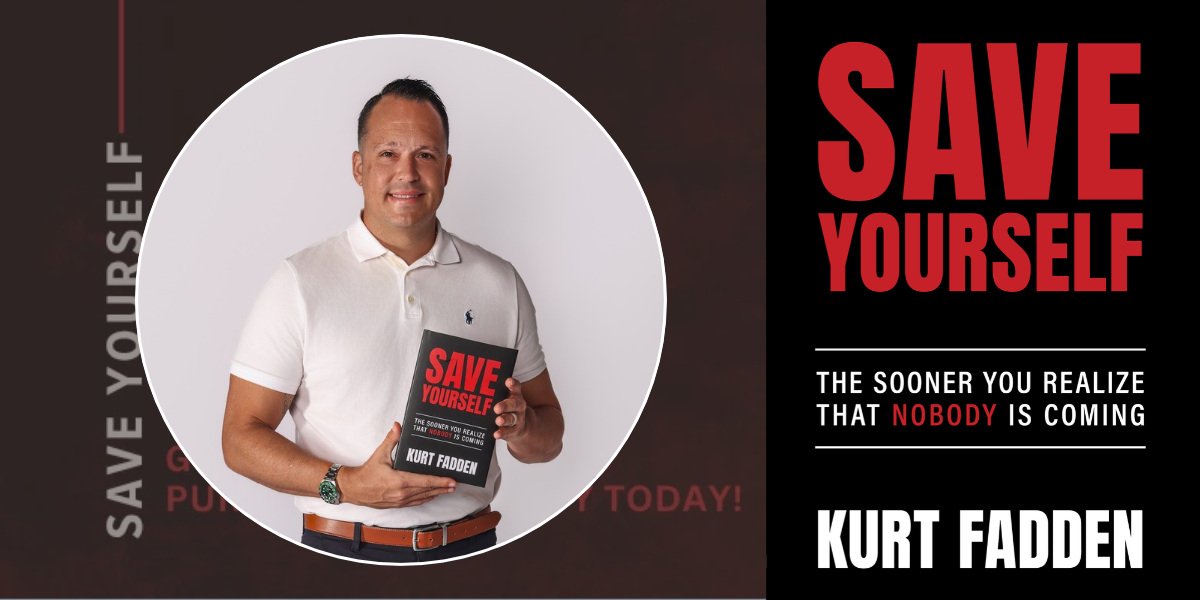
Through his coaching work with Move Maker Coaching and his real estate work with Legacy Premier Agency, Fadden emphasizes discipline, mindset, and taking ownership of one’s decisions. His book, Save Yourself: The Sooner You Realize That Nobody Is Coming, extends that philosophy into a broader challenge: stop waiting for circumstances or other people to create the conditions for progress and begin taking intentional action.
For real estate professionals, that message offers a practical starting point for examining how everyday choices influence professional development.
The Difference Between Wanting Results and Working Toward Them
Ambition can establish direction, but it cannot replace the work required to move toward a goal. A professional may want more business, stronger client relationships, or greater confidence in sales conversations. Those objectives become more actionable when translated into behaviors that can be practiced and evaluated.
Fadden’s emphasis on personal accountability encourages professionals to examine their role in their own progress. Rather than attributing every disappointment to the market, clients, or competition, they can ask which parts of their approach remain within their control.
That distinction does not mean external conditions are irrelevant. Real estate professionals operate amid factors they cannot individually determine, and not every lost opportunity reflects a personal failure. Accountability is more useful when it helps distinguish unavoidable circumstances from decisions that can be improved.
A professional might review how consistently they follow up with prospective clients, prepare for conversations, organize their work, or respond when an approach does not produce the expected result. These are examples of behaviors that can be examined without assuming that any single habit guarantees a particular outcome.
The objective is to replace vague frustration with a clearer assessment of what can change. When professionals identify specific actions within their control, they have a more practical basis for adjusting their approach.
Why Discipline Matters When Motivation Fades
Motivation can make a new goal feel achievable, particularly at the beginning of a project or a change in routine. Maintaining that effort becomes more challenging when progress is gradual, competing responsibilities increase, or repeated tasks lose their novelty.
Fadden is known for motivating sales teams and promoting discipline and extreme ownership. His philosophy highlights the importance of continuing to act even when enthusiasm is no longer enough to sustain the work.
For real estate professionals, discipline can take the form of protecting time for important tasks, following through on commitments, preparing carefully for client interactions, and reviewing completed work to identify areas for improvement. The specific routine will depend on an individual’s responsibilities and business model, but the principle is consistent: professional intentions need a structure that supports follow-through.
Discipline also makes room for learning. When a conversation does not go as planned or a strategy produces disappointing results, a professional can evaluate what happened rather than simply abandoning the effort or repeating it without reflection.
The goal is not to turn every day into a test of willpower. It is to establish workable routines that make important actions more consistent and reduce dependence on temporary bursts of enthusiasm.
Taking Ownership Without Ignoring Reality
The language of extreme ownership can be misunderstood if it is treated as a demand to accept blame for everything. Real estate professionals cannot control every client decision, market condition, transaction outcome, or unexpected disruption. Attempting to control what is outside their influence can create frustration without improving performance.
A more constructive interpretation centers on responsibility for one’s response. Professionals can acknowledge a setback, identify the factors that contributed to it, and decide what to do next. They can seek guidance, learn from colleagues, and adapt their methods while retaining responsibility for their own choices.
This approach also requires resilience. Trying a new strategy or developing a different skill can involve uncertainty, and improvement is not always immediate. A willingness to reassess assumptions and learn from experience can help professionals avoid treating one disappointing result as a permanent limit on their potential.
Fadden’s broader message about mindset and personal responsibility encourages people to think differently and try something new. In a real estate context, that may mean reconsidering an ineffective routine, approaching a challenge from another perspective, or becoming more deliberate about professional development.
Building a More Intentional Professional Life
In Save Yourself, Fadden challenges readers to stop waiting for someone else to initiate the changes they want to see in their lives. Applied to real estate, the message is not that professionals must work in isolation or solve every problem alone. Mentors, colleagues, training, and collaboration can all contribute to growth. The distinction is that outside support cannot substitute for personal commitment.
Professionals can begin by identifying one area where their intentions and behaviors do not align. They can establish a realistic action, decide how to evaluate their follow-through, and review what needs to change when obstacles arise. Repeating that process can make development more deliberate than relying on motivation alone.
Fadden’s approach places the responsibility for action at the center of professional growth. While no routine can guarantee a specific sales result, disciplined behavior gives professionals a way to respond more thoughtfully to challenges and remain engaged in their own development.
Ultimately, consistent performance is not simply a matter of wanting more. It requires examining current habits, accepting responsibility for available choices, and taking the next practical step. For real estate professionals seeking to improve how they work and how they respond to setbacks, that shift from intention to disciplined action offers a useful place to begin.
Learn More and Connect with Kurt Fadden
Book: Save Yourself: The Sooner You Realize That Nobody Is Coming
Website: https://kurtfadden.com/
Facebook: https://www.facebook.com/kfadd