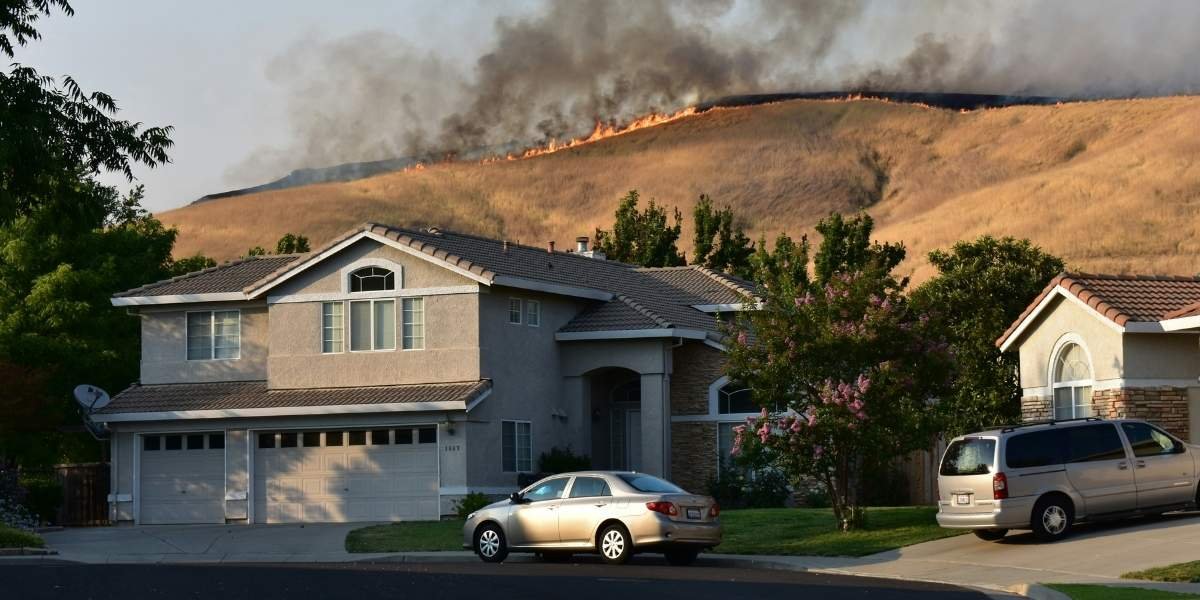
Wildfire exposure is altering housing migration across rural California as buyers, sellers and lenders weigh insurance access, hazard maps and ownership costs. State and industry data show an uneven pattern, with some fire-prone counties losing residents while others continue attracting households seeking lower prices and more space.
Key Takeaways
- California’s high-fire-risk counties recorded a net domestic outflow of 6,937 people in 2023, reversing a small inflow in 2022.
- Census estimates for July 2024 through July 2025 show domestic migration gains in some exposed rural counties and losses in others.
- The California FAIR Plan’s share of new and renewed residential policies rose from 1.6% in 2018 to 3.7% in 2023.
- Among California homeowners without a mortgage, 16% were uninsured in 2023, with relatively high uninsured shares in several rural areas.
California’s high-fire-risk counties lost 6,937 more domestic movers than they gained in 2023, according to a Redfin analysis of Census migration data and First Street risk scores. The result reversed a net inflow of 763 people in 2022 and differed from the national pattern, where high-fire-risk counties collectively gained residents.
Newer Census estimates show no uniform retreat. From July 2024 to July 2025, domestic migration was positive in Butte, Shasta, Lake, Calaveras and Amador counties. It was negative in Tuolumne, Siskiyou, Plumas and Tehama counties.
The figures indicate that wildfire exposure is influencing housing migration by county and property rather than producing one statewide exit.
Housing Migration Now Depends on More Than Price
Rural California still appeals to households seeking larger properties and lower purchase prices than many coastal markets. Wildfire exposure, however, can change the financial calculation before a buyer reaches the offer stage.
California’s Fire Hazard Severity Zone maps classify areas as moderate, high or very high hazard. The Office of the State Fire Marshal uses fire history, vegetation, predicted flame length, ember movement, terrain and typical fire weather when developing the maps.
The agency distinguishes hazard from risk because the maps do not account for every property-level mitigation measure. Risk considers existing conditions and modifications such as defensible space, fuel reduction and ignition-resistant construction.
Two homes within the same zone may have different roofs, vents, vegetation clearance, road access and water availability. Buyers may therefore need to assess the designation alongside the property’s condition and the cost of possible upgrades.
A comparatively affordable foothill home may require defensible-space work, ignition-resistant improvements or a more expensive insurance arrangement. Those costs can narrow the price difference between a rural property and a smaller home in a lower-hazard market.
Insurance Access Becomes a Transaction Gatekeeper
Mortgage lenders typically require home insurance as a condition of a loan. Buyers who cannot secure acceptable coverage may face delays, revised loan terms or a canceled purchase. An owner without a mortgage would not face the same loan condition but would carry the direct cost of an uninsured loss.
California Department of Insurance data shows that new and renewed FAIR Plan policies reached 324,954 in 2023, up 49,823 from 2022. The plan’s residential market share rose to 3.7%, compared with 1.6% in 2018. Growth was concentrated in counties with more homes exposed to high wildfire risk.
The FAIR Plan provides basic fire protection when traditional coverage is unavailable. It does not automatically match the protections offered by a standard homeowners policy.
State data indicates that many policyholders may not have a companion Difference-in-Conditions policy. This separate coverage can address perils such as theft, water damage and liability that are not included in basic FAIR Plan protection.
That coverage gap can affect household budgets and lending decisions. It also places the broader California insurance market closer to the center of rural housing activity, where insurability may determine whether buyer interest becomes a completed sale.
Terner Center research found that 16% of California homeowners without a mortgage were uninsured in 2023. Low insurance coverage was more common in many rural areas, particularly in the far north and southeast. The researchers, however, did not find a statistically significant correlation between wildfire risk and the uninsured rate.
Lower Prices Keep Rural Demand in Play
Wildfire exposure has not removed demand from higher-risk markets. A 2026 Realtor.com analysis found that homes facing severe or extreme climate hazards continued drawing shopper attention in several expensive California counties when they were priced lower per square foot than properties without those risk levels.
The statewide finding does not describe every rural county, but it helps explain why movement continues toward exposed areas. Buyers priced out of metropolitan markets may still prioritize space or proximity to family. Retirees and local workers may also have limited alternatives in the communities where they want or need to live.
That trade-off makes early insurance estimates, evacuation routes, water access and building materials relevant parts of a property review. Broader property hazard assessments can also help buyers examine wildfire information alongside other location-specific exposures.
Sellers face related questions about prior claims, policy history, roof age, vegetation management and completed mitigation work. Documentation cannot remove wildfire exposure, but it can help buyers and insurers evaluate a property beyond a broad map category.
Rural California is not moving in one direction. Housing migration is being sorted by insurance access, household budgets, property condition and tolerance for wildfire exposure. The dividing line is increasingly whether a specific home remains insurable and affordable after its risk-related costs are counted.
Frequently Asked Questions
How Is Wildfire Risk Affecting Rural California Homebuyers?
Wildfire exposure is prompting buyers to examine insurance availability, hazard maps, evacuation access and mitigation costs earlier in the search. These factors can change ownership costs even when a rural home has a lower listing price.
Are People Leaving All High-Fire-Risk Counties in California?
No. Redfin found an overall net outflow from California’s high-fire-risk counties in 2023, but newer Census estimates show positive domestic migration in some rural counties and losses in others.
What Role Does the California FAIR Plan Play?
The California FAIR Plan offers basic fire coverage when a property cannot obtain coverage through the traditional market. Buyers may need separate coverage for protections not included in the basic policy.
Do Fire Hazard Maps Determine Insurance Prices?
No. California officials state that Fire Hazard Severity Zone maps measure hazard rather than the complete risk of an individual home. Insurers use separate underwriting information, while property conditions can affect coverage decisions.
Will Wildfire Risk Stop Housing Migration Into Rural California?
The available data does not show a complete halt. Housing migration continues in both directions because wildfire exposure is weighed alongside affordability, space, family ties and insurance access.