By: Kattie Muniz
St. Petersburg, Florida, isn’t a city short on coffee shops. Sure, it has the neighborhood classics, the digitally popular pour-overs, and the high-end espresso bars vying for Instagram shots, but on any given day in downtown St. Pete, Southern Grounds (aka “SoGro”) offers an unmistakably different vibe. Not just because of its menu (though the latte is excellent) but because of the way people drift through its doors and stay to hang around with others.
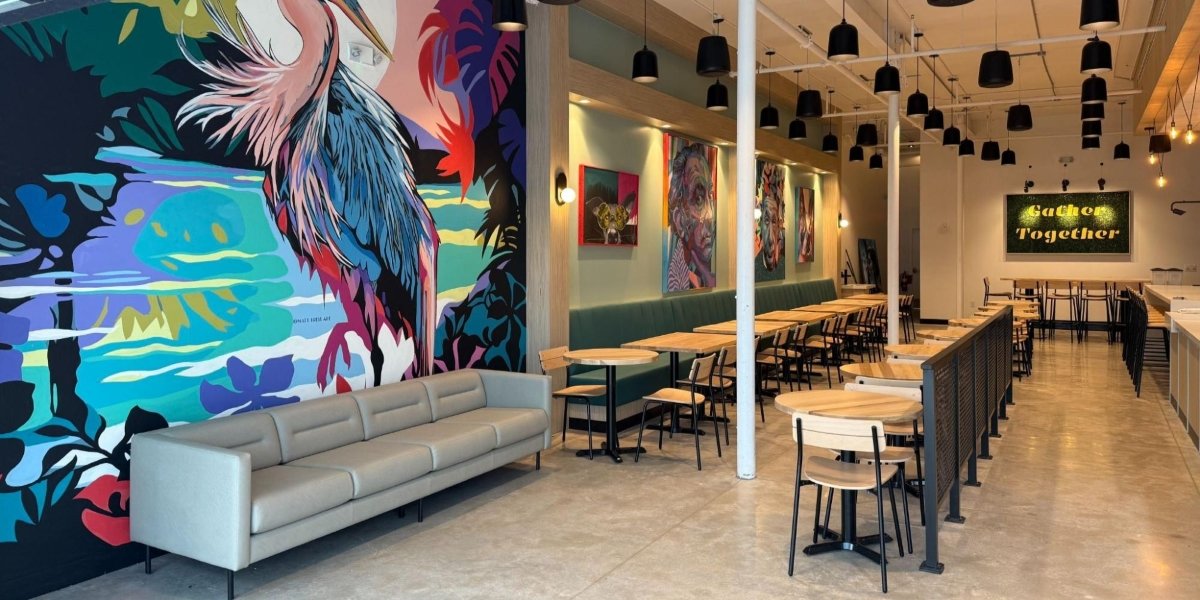
Out front, a group of friends relaxes after hitting the gym while chatting over coffee. Inside, freelancers are staked out in corners with their faces pressed up to their laptops and notebooks. At the long, polished wooden bar, friends laugh over glasses of wine, and the baristas check on each customer to make sure they have everything they need without pressuring them to order anything else.
That kind of culture doesn’t appear by accident. For Jordan Hooten, co-owner and operator of Southern Grounds in the St. Pete-Tampa market, this space has been a study in intentional presence.
“When I didn’t have an office, I used to go up to Southern Grounds in Jacksonville all the time,” Hooten said in a recent interview with Business Insider. “It was a place where I could sit on my laptop and order coffee, and didn’t feel pressured to order food until I was ready to order food. If I wanted to stay and work on my laptop and make phone calls for four hours, I could.”
Eventually, Hooten contacted the company’s founder on Facebook and said that he wanted to open one of his own as a franchise. “It’s my favorite place in the world to go,’ and that’s how all this started,” Hooten told Business Insider.
For Hooten, the point wasn’t just to invest in any coffee shop for another stream of passive income. It was to invest specifically in Southern Grounds and its brand.
From hospitality tours to real estate vision
Hooten’s path to opening Southern Grounds’ St. Pete location began after earning his real estate license in 2015 while working with a PGA Tour sports technology partner, making his way across Florida through Jacksonville, St. Petersburg, and Tampa. But long before then, his first real lesson in cultivating the community and culture of a space came while working in hospitality at Florida State University, an experience that gave him an intuitive understanding of how environments shape human behavior.
“What drew me to Southern Grounds wasn’t the coffee,” Hooten says. “It was the way a place like that can influence everything about your day.”
That insight, sharpened by years spent placing properties and negotiating leases, framed Hooten’s approach when bringing Southern Grounds to St. Pete.
The space between work and life
St. Pete is a vibrant city with eclectic tastes. But one thing every shop, restaurant, and storefront has in common is that they are created for the community.
Southern Grounds is no exception. In fact, Hooten’s emphasis on community and intentional design is what’s made the location so popular. After spending hundreds of thousands of dollars to revamp the location from what looked like an old garage into a functional space, he ensured that everything about Southern Grounds was done intentionally, letting customers know it’s not just a place to pop into (though they can), but a place they can settle into.
Remote work isn’t going anywhere. With more employees choosing to work outside their homes and locals deciding to meet for early-morning excursions rather than late-night drinks, it’s no wonder that coffee shops like Southern Grounds are gaining ground in creating a new kind of third space for the modern era.
A new kind of anchor tenant
The customer service and retail industries have long talked about anchor tenants in terms of big-box draws and flagship storefronts, but Southern Grounds offers a different angle for something generally reserved for corporations like Walmart or Target: community. Coffee shops can easily become anchor tenants when they get involved with the community, bring a fanbase from their previous location, or simply design a space that people want to stay in for a while.
This tenancy holds power. It affects foot traffic not just for anchor tenants like Southern Grounds, but for all neighboring businesses. When customers stay longer, they start to notice other nearby storefronts and get more comfortable exploring the neighborhood.
Those discoveries later turn into conversations with friends and family, like, “I went to that new hobby store next to SoGro we always talk about,” or “Did you try that sushi restaurant a couple of doors down from SoGro?”
Those are the types of conversations business owners want to happen, because even when customers aren’t inside their store, they’re still mentally there.
Attachment to place
Southern Grounds doesn’t simply occupy space but adds a layer of experience to it. As Hooten explains, real estate is, at its core, about the connection between people and places, between aspirations and addresses.
“I bartended in college, so I’ve always been on the hospitality side of business, and I guess you could say real estate is hospitality,” Hooten told Business Insider. “It’s being a people person, enjoying talking to people, enjoying hearing their stories, and where different people are from and what they’re doing and what they’ve got going on the rest of the weekend, just caring.”
For a market as dynamic, diverse, and increasingly defined by intentional design as St. Pete, that difference is palpable. People don’t just stop by Southern Grounds. They stay.