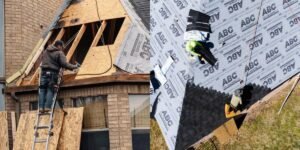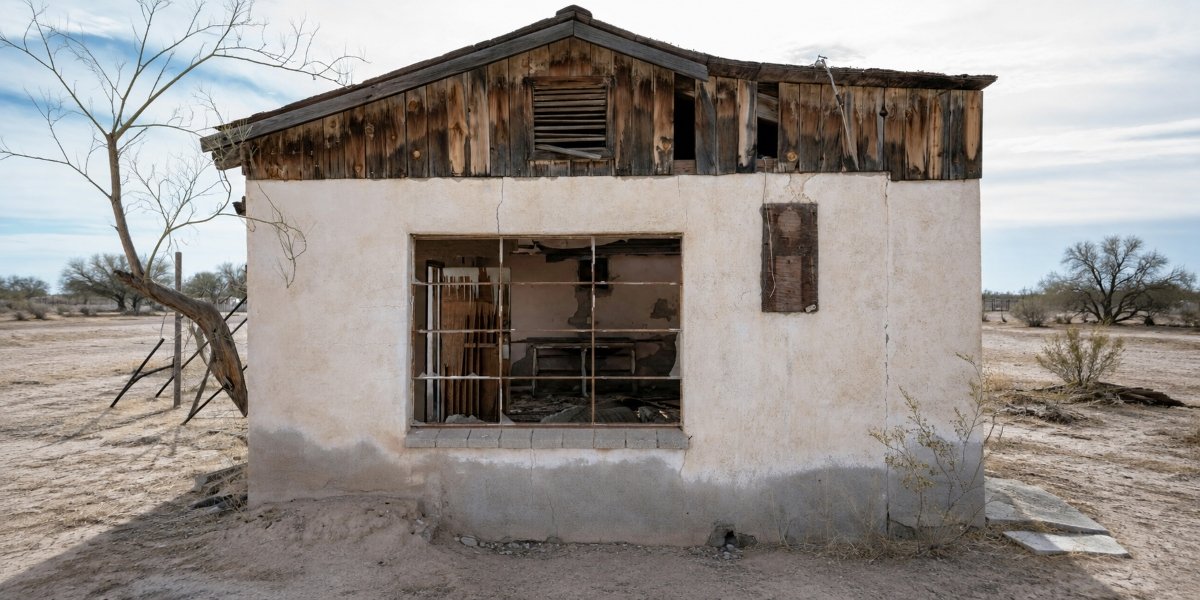
HomeWise buys single-family houses in almost any condition: inherited, vacant, fire- or water-damaged, behind on payments, carrying code violations, or occupied by tenants. It declines properties it cannot value from nearby sales. It is usually a poor fit for a move-in-ready house whose owner has time to list, because the open market normally pays more.
Consider a hypothetical estate in Lakeland, Florida. Two siblings inherit a 1968 three-bedroom in March 2026. A kitchen fire the previous autumn took out the range wall, the cabinets and part of the ceiling, and the roof is 22 years old. A tenant is still in the back bedroom at $700 a month. A restoration contractor bids $58,000, and renovated houses on the same block closed between $228,000 and $241,000 over the winter. Damage plus distance plus an occupant is the profile a direct buyer is built for. The figures are illustrative, not from a real file.
What condition problems does a direct buyer price rather than refuse?
Six categories cover most of what arrives.
- Inherited houses. Decades behind on maintenance, full of a lifetime of belongings, and owned by two or three people in different states who agree on almost nothing.
- Vacant houses. Empty for months or years with the utilities shut off, which leaves the plumbing unknown and the mold question unanswered until the water goes back on.
- Fire and water damage. Priced from a restoration bid rather than a guess. Smoke travels further than flame, so the estimate covers rooms that never burned.
- Owners behind on payments. Arrears and the mortgage payoff come out of the proceeds at settlement, the same way any loan balance does.
- Open code violations. An unpermitted addition, a failed inspection, a municipal lien for an uncut lot. Clearing the file becomes a line in the offer.
- Tenants in place. A lease survives a sale in most states, so the house is priced with the occupant and the remaining term attached.

Search terms tell the same story. Phrases such as “sell house as is” and “buy home as-is” get typed by owners who priced the repairs and decided against them, a different question from what the finished house is worth.
How does an owner who wants to sell a home as is know the house qualifies?
By measuring it against what a lender would demand. Federal rehabilitation lending exists because an ordinary mortgage will not fund a house in poor condition. HUD puts its own program plainly: “Section 203(k) insures mortgages covering the purchase or refinancing and rehabilitation of a home that is at least a year old.” The eligible work listed on HUD’s 203(k) rehabilitation page starts with “Eliminating health and safety hazards that would violate FHA’s MPR” and runs through foundations, structural repair, roofing, plumbing and electrical systems. A house needing any of that is normally unfinanceable for a retail buyer, which is why cash buyers exist.
The supply is not small. According to ATTOM’s Q2 2026 Vacant Property and Zombie Foreclosure Report, published May 21, 2026, nearly 1.4 million homes, or 1.3 percent of residential properties in the United States, were vacant in the second quarter of the year. The same report counted 245,376 properties in the foreclosure process, 8,312 of which had been abandoned before the case finished.
Does location change the answer?
Sometimes more than condition does. A house that has taken water once will take it again if it sits in a mapped high-risk flood area, and the premium a future owner pays turns on that designation. The FEMA Flood Map Service Center is where you look up the designation by address. FEMA runs that site as the public record behind the National Flood Insurance Program, and cautions that its maps change continually as new studies land, so a zone an owner remembers from a purchase in 2011 may not be the zone a buyer prices in 2026.

Which houses does HomeWise turn down?
Two kinds, and damage decides neither. The first is a property that cannot be valued from nearby sales: a one-off house on 40 acres, a converted storefront, a street where nothing has changed hands in six years. Without recent comparable sales, there is no defensible after-repair value to build an offer on, and a house like that may be declined rather than guessed at. The second is not really a refusal. A move-in-ready house in an ordinary neighborhood, owned by someone who can wait 60 or 90 days, usually nets more through a listing even after commission. Buyers such as HomeWise price from condition and comparable sales.
|
What the house has |
How a direct buyer treats it |
Usual outcome |
|---|---|---|
|
Fire, smoke or water damage |
Priced from a restoration bid |
Bought in current condition |
|
Tenant in place under a lease |
Term and rent priced into holding cost |
Bought with the occupant |
|
Open code violations |
Cost of clearing the file added to repairs |
Bought, offer reduced |
|
No comparable sales nearby |
No defensible after-repair value |
May be declined |
|
Move-in-ready, owner not in a hurry |
Nothing for a repair budget to price |
Listing usually nets more |
HomeWise, a direct home-buying company that purchases distressed single-family houses in California, Texas, Florida, Arizona, Georgia and other states, has bought more than 500 homes and asks for no repairs, cleaning, staging or showings before it closes. Its page on how to sell a house as-is lists the conditions it works with, including foundation, roof, and structural damage; fire, smoke, flood, and water damage; mold; pests; code violations; hoarder houses needing a full cleanout; and gutted kitchens. Requesting an offer is free and carries no obligation; an offer can arrive in as little as one hour, and the company charges no agent commissions, listing fees, or service fees.
The sequence does not change with the condition. The company’s three-step description of the process runs from a set of property details, to an offer with the arithmetic explained, to a closing date the seller picks: seven days once title is clear, or as far out as 60 days. Code violations, tenant occupancy, and an estate that has not cleared probate each carry state-specific rules, so a homeowner in any of those positions should have a licensed attorney in that state read the paperwork first.
Frequently asked questions
What houses does HomeWise buy?
Single-family houses, in condition ranging from dated to barely standing: inherited and vacant properties, fire- and water-damaged homes, houses carrying open code violations, houses with tenants still living in them, and houses whose owners have fallen behind on payments. The published limits are valuation and fit, not a repair list.
What does a search for “sell my house as is fast” actually return?
A mix of three business models. Direct buyers spending their own money, iBuyers pricing from an automated model and charging a service fee, and lead resellers that pass the address on to whoever pays for it. The first call after such a search often comes from a reseller rather than a buyer.
Will a buyer take a house with a tenant still living in it?
Often yes, with the lease attached. A lease usually survives the sale, so the new owner inherits the term, the rent and the security deposit. What moves the number is the gap between that rent and the market rate, and whether the tenancy is documented at all.
Does fire damage put a house out of reach?
Not by itself. Restoration contractors price fire work every day, and their estimate is a figure a buyer can subtract. Structural harm to the frame or foundation pulls an offer down further than a burnt kitchen does, and a condemned house adds a permitting step before any other work begins.
Disclaimer: This content is for general informational purposes only and should not be considered as financial advice. The content is not intended to be a substitute for professional financial advice, investment advice, or any other type of advice. You should seek the advice of a qualified financial advisor or other professional before making any financial decisions.