If you need more space in your home, you may be surprised by the value of optimizing the space you already have instead of adding to it.
By Will Jones
Your house is a finite fixture. Objectively, nothing can change about your house unless you commit to costly, laborious renovation. There’s only so much room in the house, and if you live in the same place for years, you may find that at a certain point the place has become overrun with all your belongings and entirely too cluttered.
Subjectively though, your perception of your house’s space is fluid and malleable. As counterintuitive as it may sound, how a given room of the house is organized can make a significant difference regarding how much space you feel that you have or do not have. The simple act of rearranging furniture can shift your entire perception of a room’s vibe, and that can make all the difference.
Moving and expanding outward when you have clutter can be expensive or impractical. However, many homeowners are increasingly looking to underused basement areas for more functional living space.
Of course, this task comes with its own challenges. Turning a low, dated, or structurally limited basement into usable space involves more than cosmetic finishing. Foundation conditions, ceiling height, moisture management, drainage, structural planning, building requirements, and the intended use of the room can all influence whether a basement renovation makes sense. Basement underpinning can help fortify this space and allow you to rethink your home’s interior layout in vital, space-freeing ways.
The Value of Additional Space
Homeowners who need more room do not always have to relocate or build a large addition. Recently, more homeowners have chosen renovation over relocation or expansion. The simple act of renovation essentially forces you to reconsider the layout of your home in ways you often haven’t considered in years. When you live somewhere, things tend to pile up and become invisible to you. You see it every day, so it just becomes normal to you, in a Stockholm syndrome-esque fashion.
However, preparing for a renovation means moving furniture around and clearing out clutter so the work can be done, and this can spark numerous other reconsiderations. It can break your perception of what has become normal in your home and let you see issues with fresh eyes, which can be extremely beneficial for freeing up space.
The Basement Factor
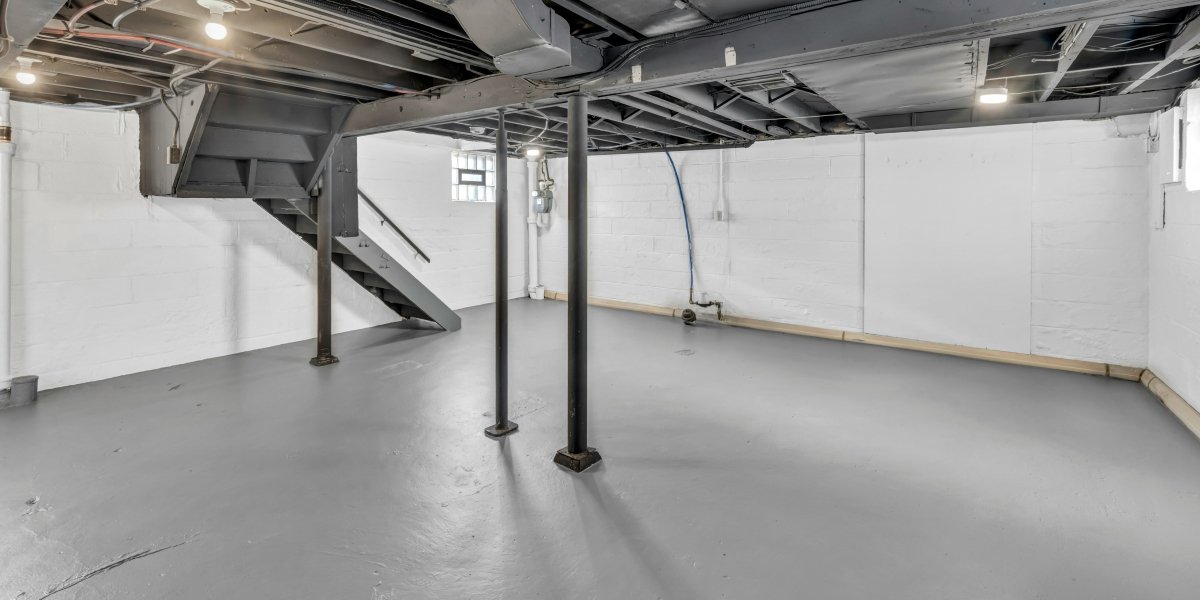
When it comes to utilizing space in the home, basements are often overlooked. Older homes may have lower ceilings, awkward mechanical layouts, limited natural light, moisture concerns, or unfinished areas. But with the right renovation, your basement can become more than dingy storage space; it can become a vital part of the house itself. A renovation should consider the space’s physical limitations before focusing on finishes, furniture, or décor.
In renovating a basement, it is crucial to evaluate the foundation early. Conditions such as cracking, bowing, moisture, standing water, drainage issues, grading, and structural movement can be relevant during a professional assessment.
Building for the Future
It’s incredibly common for homeowners to feel as if they are running out of space and look for ways to ease those difficulties. While many people’s first thought is to expand or add onto the home, sometimes, something as simple as reorganizing or renovating an underutilized part of the house, such as the basement, can make all the difference. Renovating helps homeowners think about the space’s future use, and it can be extremely beneficial.
FAQ
When should a homeowner consider a major basement renovation?
A major basement renovation may make sense when the existing lower level doesn’t meet the household’s space needs and if its structural, moisture, and layout conditions can reasonably support improvements.
Can an older basement be converted into usable living space?
Whether or not an older basement can be converted depends on factors such as ceiling height, foundation conditions, moisture, utilities, ventilation, access, and local building requirements.
What should be checked before finishing a basement?
Be sure to have elements like foundation condition, water intrusion, drainage, structural concerns, mechanical systems, electrical needs, insulation, and permit requirements checked before beginning the process of finishing a basement.
Does renovating a basement add value to a home?
More functional space added by a basement renovation may improve marketability or usefulness, but the effect varies by property, local market, renovation quality, and project cost.
Why should structural work come before cosmetic basement upgrades?
Before beginning cosmetic basement upgrades, structural work such as flooring, drywall, cabinetry, and other finishes will need to be completed as they can be affected if underlying foundation or moisture problems still need to be corrected.