By: KeyCrew Media
Florida West EDA chief reveals infrastructure priorities, site inventory, and strategic focus areas driving commercial real estate opportunities in Northwest Florida.
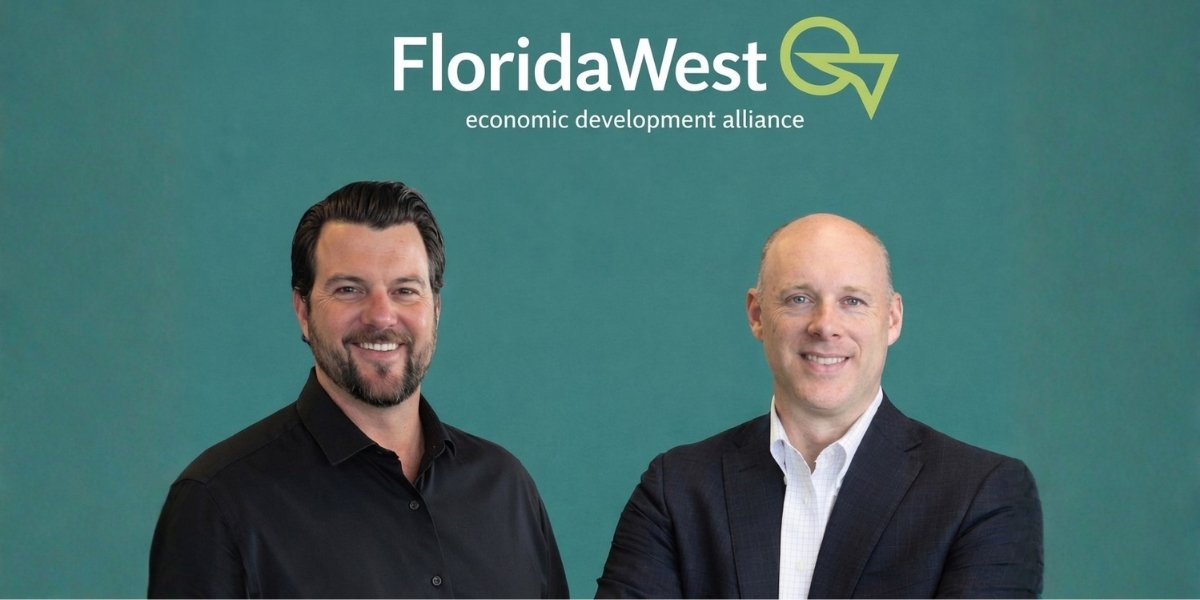
Pensacola’s emergence as a competitive market for aerospace, maritime, and defense-related industrial development is no accident. Under the leadership of Chris Platé, CEO of Florida West Economic Development Alliance, Escambia County is executing a focused strategy that commercial real estate investors and developers should understand.
In a recent Beyond the Build podcast conversation with Kelvin Enfinger Jr., Platé outlined the site inventory, infrastructure priorities, and industry focus areas shaping development opportunities across the market.
The Central Commerce Park Opportunity
The crown jewel of Escambia County’s development portfolio is Central Commerce Park: 240 acres with 230 developable acres located just 15 minutes north of Interstate 10. Currently undergoing engineering for road layout and site planning, the park represents Pensacola’s strongest play for traditional manufacturing within targeted industry clusters.
“That is a very unique gift to have that land sitting there between two interstates,” Platé emphasizes, referencing proximity to both I-10 and I-65. The engineering process focuses on maximizing site density while limiting water and sewer infrastructure costs, a critical factor for development economics.
When asked to identify one infrastructure priority for maintaining Pensacola’s competitive momentum, Platé didn’t hesitate: “I would definitely look at the larger infrastructure needs for Central Commerce Park to get heavier infrastructure up in the middle part of the county.”
Current Site Inventory
Beyond Central Commerce Park, Escambia County offers varied development opportunities across multiple readiness stages. The 9-acre Pensacola Technology Campus downtown provides turnkey development with 12-15 megawatts of power capacity, suitable for multi-story buildings and smaller data centers in a downtown location adjacent to the Pensacola Bay Center.
Midtown Industrial Park, a former brownfield with clean sections, sits nearly shovel-ready pending infrastructure optimization. The site offers flat terrain requiring roadway installation and infrastructure positioning to maximize usability.
Ellyson Park provides infill opportunities with heavy infrastructure already in place, though most land is privately held rather than under public control like Tech Park (owned by PEDC) and Midtown (county-owned).
Outlying Field 8, a former Navy training field, offers another 165 acres of Class A park space once pricing negotiations between private owners and the county conclude. The site requires more development work than the current shovel-ready inventory.
The Bluffs provides unique barge access for maritime-focused operations, with a new roundabout currently under construction, improving truck and employee access.
Strategic Industry Focus
Platé described economic development strategy as “four legs of the stool”: aerospace and aviation, medical and life sciences, marine and maritime, and cyber and defense. This focused approach reflects competitive analysis showing where Pensacola demonstrates genuine advantages versus pursuing everything.
“We’re probably not the strongest in logistics just because we don’t have a lot of bodies, a fairly reasonable low unemployment rate, and not a lot of sites on our interstates,” Platé explains. “It makes sense to use those sites for more high-value projects.”
Recent Wins Signal Market Positioning
Field International’s decision to relocate its global headquarters from the United Kingdom to Pensacola demonstrates the market’s appeal for aerospace supply chain companies. The MRO supplier serves Airbus, Boeing, and ST Engineering, starting with 50 jobs and expansion plans. “That company is so family-focused and family-oriented. They moved their entire headquarters because it fit with what they wanted,” Platé notes.
Project Maeve, the recently announced maritime manufacturing initiative at the Port of Pensacola, which is potentially bringing 2,000 jobs, positions the region for significant supply chain development. “You bring in the mama pig and all the little piglets come with it,” Platé explains, referencing how anchor projects attract supplier networks.
Infrastructure and Energy Considerations
Energy capacity remains critical across development sites. While Pensacola isn’t pursuing mega data centers, even smaller $200 million data center projects require infrastructure planning with Florida Power & Light and the northern county cooperative.
The three rail providers serving Escambia County (two short lines and CSX) create additional competitive advantages. “There’s not that many places in the United States with good rail sites,” Platé notes.
Pipeline Indicators
Platé indicated “a very strong life science project” under consideration for Tech Park, potentially serving as an anchor tenant connecting the former Florida Power building to the Institute for Human and Machine Cognition. Additional aerospace projects remain in the pipeline, along with local energy company expansion.
For commercial real estate investors and developers evaluating Northwest Florida opportunities, Pensacola’s combination of available industrial land, strategic industry focus, improving site readiness, and recent project wins signals a market gaining momentum in targeted sectors.
Listen to the full conversation on Beyond the Build – here.