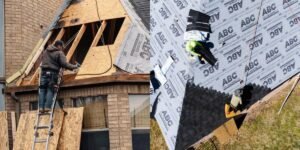
New York State Homes and Community Renewal (HCR) has confirmed the start of a $65 million housing initiative aimed at expanding residential supply across selected development sites, including Settlers Crossing. The funding package supports a combination of new construction projects structured to increase affordable housing availability, with a focus on both ownership and long-term community stability.
The financial framework for the initiative draws from state housing allocation programs designed to support mixed development strategies. Rather than concentrating resources in a single large-scale project, the funding is distributed across multiple sites to maximize geographic reach and housing diversity. Settlers Crossing represents one of the designated locations where funds will be applied specifically toward single-family home construction.
The announcement signals the transition from planning and allocation stages into active development, with construction-related activity expected to begin across participating sites. The structured rollout is intended to ensure coordinated execution across infrastructure, permitting, and residential building phases.
Settlers Crossing site development plan
At the Settlers Crossing site, the project will deliver 16 affordable single-family starter homes, forming a compact residential development within the larger initiative. The site has been selected as part of a broader planning process that evaluates land availability, infrastructure capacity, and integration into existing community layouts.
The development plan emphasizes structured residential design, with each unit intended to meet affordability requirements established under state housing guidelines. The homes are expected to be constructed as part of a unified development layout that supports efficient land use and neighborhood consistency.
Site preparation activities typically include grading, utility access installation, and road connectivity planning. These foundational steps are necessary before vertical construction begins and are coordinated with local planning authorities to ensure compliance with zoning and infrastructure standards. Settlers Crossing is positioned as a controlled-scale development, allowing for phased execution and reduced disruption to surrounding areas.
The 16-home configuration reflects a targeted approach rather than large-scale subdivision development. This structure enables focused construction management while still contributing to broader housing supply goals within the state program.
Affordable housing and ownership objectives
The inclusion of 16 single-family starter homes at Settlers Crossing is designed to expand access to homeownership opportunities for income-qualified households. The affordability structure is aligned with state housing assistance frameworks that aim to reduce entry barriers for first-time buyers.
Single-family starter homes typically serve as entry points into the housing market, offering long-term stability and equity-building potential. In this case, the Settlers Crossing development is structured to provide ownership opportunities rather than rental housing, reflecting a policy emphasis on diversified housing solutions.
Affordability mechanisms within such projects often include pricing controls, income eligibility criteria, and financing support options. These mechanisms are designed to ensure that homes remain accessible to targeted income brackets while maintaining long-term residential stability within the development area.
The project also contributes to balancing housing supply between rental and ownership sectors. By incorporating ownership-focused developments, the state program addresses multiple segments of housing demand simultaneously, particularly in regions experiencing rising property costs.
State housing strategy and planning context
The Settlers Crossing project is part of a wider housing strategy implemented by New York State Homes and Community Renewal, which oversees statewide efforts to expand and maintain housing availability. The $65 million initiative reflects ongoing policy priorities centered on increasing housing supply through coordinated development programs.
State housing strategies often combine new construction, rehabilitation of existing units, and targeted development projects in high-need areas. Settlers Crossing falls into the new construction category, focusing specifically on the creation of affordable single-family homes within a defined site.
Planning for such developments typically involves coordination between state agencies, municipal governments, and local planning boards. These collaborations ensure that infrastructure capacity, zoning requirements, and community planning objectives are aligned before construction begins.
Settlers Crossing represents a localized application of this broader strategy, translating statewide housing objectives into a specific, site-based development plan. The project contributes to incremental expansion of housing availability while maintaining alignment with regulatory and planning frameworks.
Infrastructure coordination and community integration
Infrastructure planning plays a key role in the Settlers Crossing development, particularly in ensuring that utilities, transportation access, and public services are adequately integrated into the site. These elements are typically addressed during early development phases to support long-term residential functionality.
The integration process involves coordination with local service providers to ensure access to essential utilities such as water, electricity, and sanitation systems. Road access and neighborhood connectivity are also key considerations in shaping the layout of the development.
Community integration is a central component of the planning approach, with the goal of aligning the new homes with surrounding residential areas. This includes ensuring compatibility with existing neighborhood structures and minimizing disruption during construction phases.
The limited scale of 16 homes allows for more precise infrastructure planning compared to larger developments. This enables targeted improvements and reduces the complexity of integrating new housing into existing community frameworks.
Project rollout and future development phases
With the official launch of the $65 million initiative, Settlers Crossing has entered its initial implementation stage, which includes preparatory work such as permitting, contractor mobilization, and site development preparation. These early phases establish the foundation for subsequent construction activity.
The broader housing initiative will proceed across multiple sites, with each development following its own timeline based on planning approvals and construction readiness. Settlers Crossing is one component of this phased rollout strategy, contributing to incremental expansion of housing supply.
As the project advances, additional details regarding construction schedules, eligibility requirements, and unit specifications are expected to be released through official housing program channels. These updates will provide further clarity on occupancy timelines and application processes.
The Settlers Crossing development reflects a structured approach to housing expansion, combining state funding, local coordination, and targeted site development to deliver affordable single-family homes within a broader statewide initiative.