The training ground for some of the most effective residential real estate professionals in the country is not a licensing course or a franchise onboarding program. It is a hotel front desk, a restaurant service floor, or a luxury resort concierge operation.
This is not a new observation, but an underexamined one. The correlation between strong hospitality backgrounds and strong real estate performance, particularly in markets where the client experience is central to the transaction, is significant enough to warrant more deliberate attention from brokers building teams and from buyers evaluating who they want representing them.
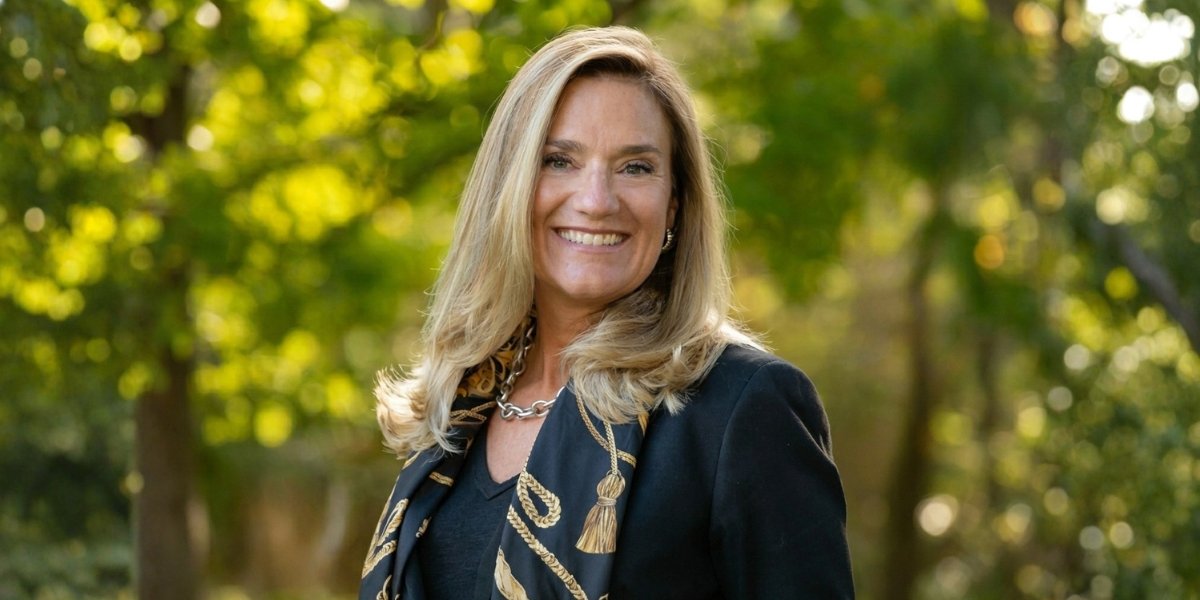
Elyse Harney Morris, principal broker at Elyse Harney Real Estate, has built her tri-state brokerage largely around this principle. After studying hotel administration at Cornell and working at five-star resorts across the Caribbean, Hawaii, and Aspen, she returned home to join her mother in growing the family’s independent firm.
A good number of the 30 agents representing Elyse Harney Real Estate across Connecticut, New York, and Massachusetts come from hospitality or related service backgrounds. “It shapes how they listen, how they communicate, and how they show up for clients at the moments that matter most,” Morris says.
The connection runs deeper than a generalized orientation toward customer service. The skills that distinguish exceptional hospitality professionals, including reading a room accurately, anticipating needs before they are stated, remaining composed when logistics fall apart, and making someone feel genuinely attended to during a stressful experience, are precisely the skills that separate good real estate agents from exceptional ones.
What Hospitality Training Actually Develops
Formal study of hotel administration covers a curriculum that is more operationally rigorous than most real estate professionals might expect. Revenue management, service quality systems, the economics of delivering the luxury experience, and the management of client expectations across complex, multi-stakeholder environments are all embedded in that training.
Informal hospitality experience, such as working in a family inn, managing concierge operations at a five-star resort, or serving as a front-of-house leader in a high-volume restaurant, develops a different but equally valuable set of skills. It teaches rapid assessment of what a specific person needs in a specific moment. It builds tolerance for interruption and the ability to hold multiple ongoing client relationships in mind simultaneously. And it creates a professional default toward proactive communication rather than reactive explanation.
In real estate, particularly in the market for significant country properties, those capabilities are not peripheral. They are central to whether a transaction closes and whether a client returns.
Why Real Estate Demands a Service Mentality
Real estate has a structural reality that is easy to overlook from the outside. The hours of peak demand are precisely the hours when most professionals have stopped working.
Buyers want to see properties in the evenings and on weekends. Clients managing a purchase while relocating from another city or country need to reach their agent when they have time to think and talk, which is not typically Tuesday at 2 pm. The emotional intensity of a real estate transaction, with the anxiety of offer negotiations, the uncertainty of inspection findings, and the complexity of closing logistics, arrives without scheduling. The agent who is not available when the client actually needs them is not, in any meaningful sense, serving that client.
This rhythm is familiar to anyone who has worked in hospitality. The most demanding moments in hotel or restaurant service do not arrive on a schedule. The professional trained in that environment does not experience the off-hours demands of real estate as an imposition. It is simply the nature of the work.
Listening as a Technical Skill
The most operationally significant skill that hospitality training develops, and the one least visible from the outside, is the capacity for active, interpretive listening.
In a real estate context, clients often describe what they want in terms that are not precisely what they need. A buyer who says they want an old house and then purchases a modern one has not been inconsistent; they have been imprecise. What they were expressing was probably something about warmth, character, craftsmanship, or connection to place, criteria that a modern structure can satisfy as fully as a historic one, if the agent is listening to the underlying preference rather than the surface specification.
Experienced hospitality professionals develop the habit of listening past the stated request to the underlying preference. Translating that skill to real estate means a buyer’s stated criteria become the beginning of a conversation rather than a checklist. The agent who asks “what made you love that house?” rather than just “what are your must-haves?” is operating from a fundamentally different framework.
The practical result is that buyers guided by this kind of listening tend to make faster, more confident decisions. They have been helped to articulate what they actually want, which is a shorter path to finding it.
Team Culture and the Service Standard
The influence of hospitality culture on a real estate team’s performance extends beyond individual agents’ skills to the team’s collective character.
Teams built around a service standard, rather than an individual production standard, tend to operate with a different internal logic. Coverage is a shared responsibility rather than a source of competitive friction. The client who cannot reach their primary agent reaches a colleague who is equally informed about their search and equally committed to their outcome.
This structure serves complex transactions particularly well. A property with significant acreage, multiple structures, and detailed land features presents two simultaneous buyer conversations: one happening inside the house, another happening in the fields and on the trails. An agent who has to choose which conversation to attend is leaving meaningful information unaddressed. A team that deploys two professionals to that showing is providing a genuinely different and genuinely better service.
The Long-Term Calculus of Client Relationships
Perhaps the most concrete outcome of a service-oriented approach to real estate is the multi-generational client relationship. When a family that purchased a property through a particular firm 25 years ago returns and refers their adult children, it is the clearest possible signal that the initial transaction was handled with integrity and care.
The firms that sustain that kind of client loyalty over decades tend to share certain characteristics. They operate in specific communities rather than across undifferentiated geographies. They maintain genuine involvement in those communities through conservation work, civic service, and the relationships accumulated over a life actually lived in a place. And they hire professionals whose orientation toward clients reflects the values that the firm has built its reputation.
The hospitality background, ultimately, is neither a hiring signal nor a credential. It is a proxy for a set of values: the belief that the client’s experience of the transaction matters as much as its outcome, and that being genuinely useful to someone in a consequential moment is its own reward.
Elyse Harney Morris is a principal broker at Elyse Harney Real Estate, an independent brokerage founded in 1987 and operating across Connecticut, New York, and Massachusetts. She specializes in significant country estates, historic farms, and conservation properties across the Litchfield Hills, Hudson Valley, and Southern Berkshires.
Disclaimer: This article is intended for informational purposes only and does not constitute legal, financial, or investment advice. The views and opinions expressed herein reflect those of the individuals quoted and do not represent an endorsement of any company, product, or service mentioned. Readers should conduct their own due diligence and consult qualified professionals before making any investment decisions.