By: Dr. Bruce Mark, DC | Hollywood Laser Pain Center | Hollywood, Florida
Every year, thousands of Broward County residents receive a disc diagnosis (herniated, bulging, or degenerative) and are steered toward surgical consultation before conservative care has been meaningfully explored. For many patients in Hollywood, Pembroke Pines, Miramar, Fort Lauderdale, and across the region, surgery is not the necessary next step. Research, including guidelines from the American College of Physicians and the North American Spine Society, supports conservative care as the appropriate first-line treatment for the vast majority of disc conditions. The Regenerative Medical Laser™ protocol is one tissue-level approach used within a conservative disc care plan.
The most important clinical decision in spine care is made before any procedure is scheduled. The window for non-surgical intervention closes permanently once fusion is performed. A comprehensive non-surgical evaluation should happen before any surgical consent is signed.
At Hollywood Laser Pain Center, I offer pre-surgical consultations for patients who have received spinal surgery recommendations and want to consider whether the Regenerative Medical Laser™ protocol may be appropriate before any irreversible procedure is scheduled.
What Is Actually Happening When a Disc Herniates?
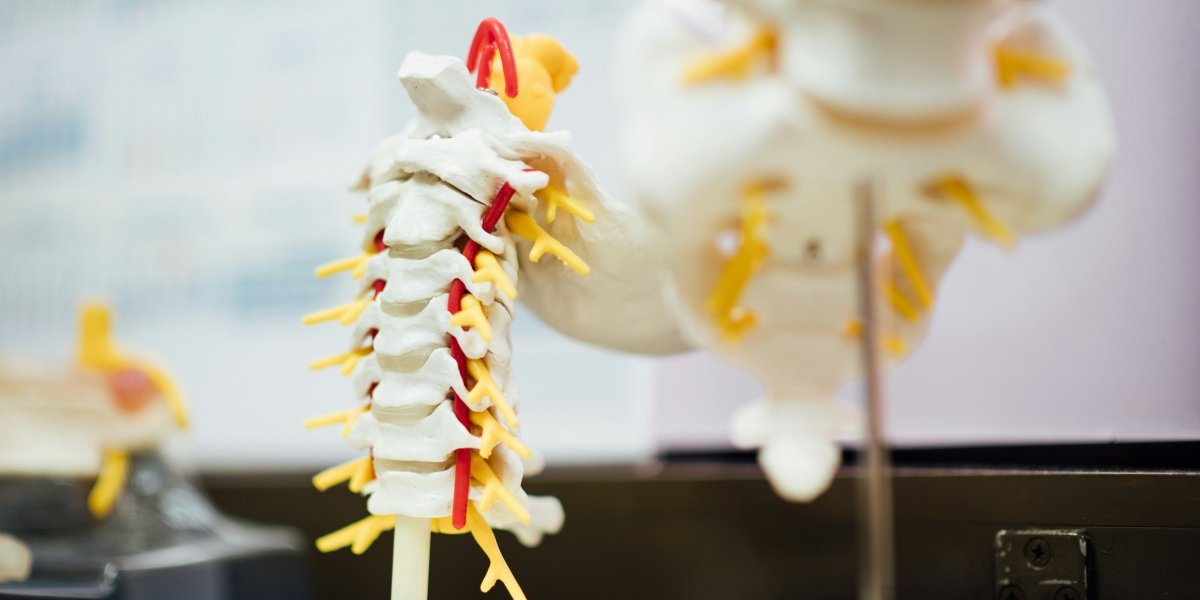
When a disc herniates, two things generate pain. First, the extruded disc material may physically compress a nerve root, causing mechanical radiculopathy. Second, and often more significant in the early phase, the nucleus pulposus proteins released into the epidural space trigger an intense inflammatory response. These proteins are chemically irritating to neural tissue and produce pain, muscle spasm, and referred symptoms even when physical nerve compression is modest.
Photobiomodulation, the mechanism behind low-level laser therapy, has been studied in the context of inflammatory pain pathways. A 2018 review in the Journal of Pain Research described how reducing pro-inflammatory cytokines (such as TNF-alpha, interleukin-1, and interleukin-6) in the epidural environment can lessen the chemical irritation of the nerve root. The review noted that this neuroinflammatory mechanism is often the primary driver of early disc-related pain. The Regenerative Medical Laser™ protocol is built around this tissue-level approach to inflammation.
What Does the Research Say About Spontaneous Disc Resorption?
One of the most important facts in disc care that patients are rarely told is that herniated disc material can and does spontaneously resorb. The body’s macrophages recognize extruded nucleus material as foreign tissue and remove it over weeks to months. Research published in PLOS ONE demonstrates that larger herniations, those most likely to be recommended for surgery, have the highest rates of spontaneous resorption.
Conditions most favorable for resorption include reduced local inflammation and appropriate movement that maintains disc nutrition and hydration. Patients who are told to rest until surgery are inadvertently creating conditions less favorable for the body’s natural resolution process.
What Does Graston Technique Add for Disc Patients?
The paraspinal muscles, thoracolumbar fascia, and gluteal tissue of disc patients develop significant restrictions in response to the protective guarding patterns that disc pain produces. These restrictions maintain compressive load on the affected disc segments and can perpetuate the pain cycle even when the primary disc inflammation is being addressed.
Graston Technique is an instrument-assisted soft tissue mobilization method used to address restrictions in the surrounding musculature and fascia. Combining this technique with photobiomodulation is one reason the Regenerative Medical Laser™ protocol at Hollywood Laser Pain Center addresses both the inflammatory and mechanical aspects of disc pain.
What Are the Red Flags That Do Require Prompt Surgical Evaluation?
Not every disc condition is appropriate for conservative care. Progressive neurological deficit, such as worsening foot drop, bowel or bladder dysfunction, or rapidly advancing weakness, requires prompt surgical consultation. Cauda equina syndrome is a medical emergency. My clinical evaluation identifies these presentations and refers promptly when surgical urgency is real.
For disc patients who do not have these red flags, a thorough evaluation of conservative options, including the Regenerative Medical Laser™ protocol, is worth considering before any decision about surgery is finalized.
To learn more, visit Hollywood Laser Pain Center online. Patient education videos are available on the ReliefNow Nation YouTube channel. Hollywood Laser Pain Center, 2607 Polk Street, Hollywood FL 33020, 954-925-7333.
___
About the Author
Dr. Bruce Mark, DC | Hollywood Laser Pain Center | 2607 Polk Street, Hollywood FL 33020 | 954-925-7333
Dr. Mark earned his Doctor of Chiropractic from Logan College of Chiropractic with honors and has practiced for more than 27 years in Hollywood, Florida. He holds certifications in Graston Technique and acupuncture, is a former collegiate football player at Wake Forest University, and practices at Broward Medical and Rehab. He is a provider in the national ReliefNow® network.
___
Disclaimer: The information provided in this article is for general informational purposes only and should not be construed as medical advice. Effectiveness of treatments may vary depending on individual circumstances. Consult a qualified healthcare professional to discuss your specific medical needs and treatment options.