Historic cities face a pragmatic issue in their development process: what is to stay and what is to change? One interesting case study in this regard is Richmond, Virginia, where a significant part of the built environment continues to reflect previous eras of development in the city. According to the city’s planning department, there are over 68,000 buildings in Richmond. Almost 23 percent of the buildings were constructed more than 100 years ago, while 81 percent are 50 years or older. Approximately 22,000 buildings in the city are included in either the Virginia Landmarks Register, the National Register of Historic Places, or both.
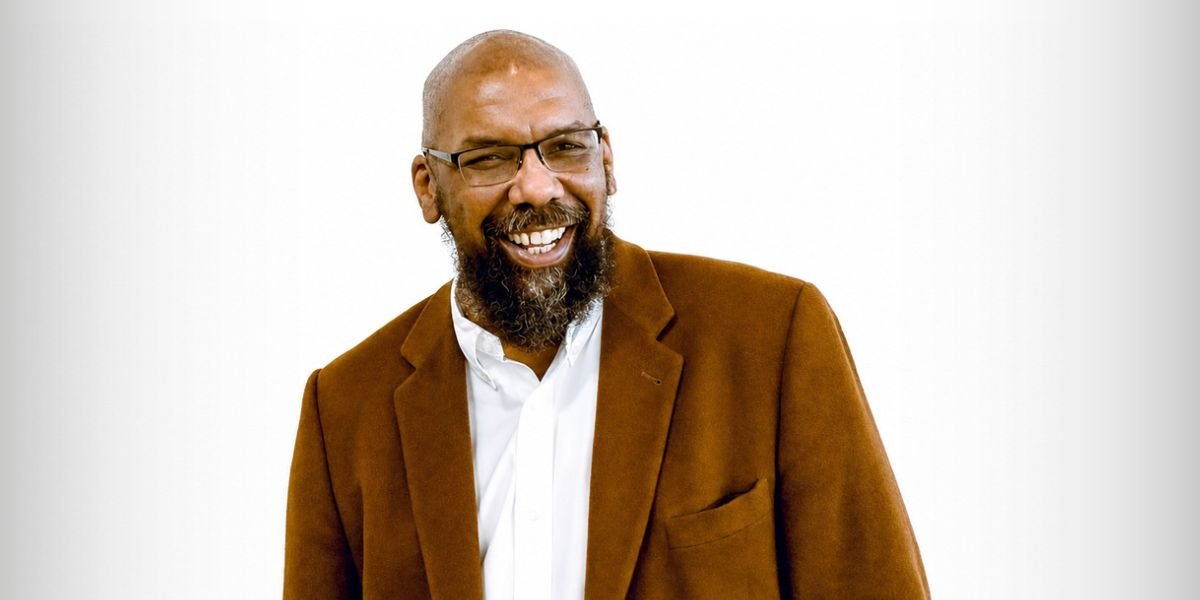
Burt Pinnock has worked within that setting for much of his professional career. His practice ranges from architecture to urban design, historic preservation, adaptive reuse, and civic design. AIA Virginia has acknowledged his contributions in the field through his listing under the City of Richmond, Richmond Slave Trail Commission, Commission of Architectural Review, Urban Design Committee, and Board of Zoning Appeals. He has also contributed at the level of the Historic Richmond Foundation and other civic organizations. Through his work in these roles, he has been part of the planning process that went beyond individual buildings to neighborhoods, public space, historic landscape, and the compatibility of future development with existing ones.
Another instance of his contribution to Richmond planning is the project called Richmond 300, which is the long-range master plan of the city. He served as the vice-chair of the Richmond 300 Advisory Board, which helped shape the plan implemented in 2020. This process considered land use, housing, transportation, parks, economic development, and many more aspects of city policy. Pinnock’s role connected his architectural practice with a city-wide planning exercise, placing him among professionals and civic participants considering how Richmond should develop over twenty years. The city’s later preservation work has continued that link, with Richmond 300 calling for a city-wide historic preservation plan and greater attention to historically Black communities and cemeteries.
Adaptive reuse forms another part of this approach. The basic idea is simple: an existing building can sometimes support a new use without losing its connection to the past. Pinnock has discussed this issue in relation to Richmond’s neighborhoods and public housing. In a 2013 interview with ArchitectureRichmond, he spoke about the redevelopment of Gilpin Court as an urban planning problem, arguing that the site should be considered as part of the city rather than treated as an isolated tract. His comments focused on mixed-income housing, commercial uses, education, retail, streets, and other elements that make up a neighborhood. The discussion showed how his planning interests extended beyond the form of individual buildings.
Pinnock’s civic work has also included cultural institutions. AIA Virginia identifies the Black History Museum and Cultural Center of Virginia among the organizations connected with his professional work. The museum’s mission is to collect, preserve, interpret, exhibit, and commemorate African American history and culture in Virginia and beyond. Its work provides a setting where architecture, historic preservation, and public education overlap. Pinnock’s wider practice has often dealt with similar questions, particularly in Richmond’s historically Black neighborhoods. The emphasis is not only on retaining physical structures. It also concerns the stories, communities, and cultural identities associated with those places.
The Richmond Slave Trail has provided another setting for this work. The trail connects sites associated with the city’s role in the domestic slave trade. It has developed through years of planning, preservation work, and public discussion. Pinnock’s involvement with the Richmond Slave Trail Commission placed him within those efforts. His participation predates the current Shockoe Project by many years. In 2009, Richmond Magazine reported that Pinnock and other Richmonders were developing plans for a national slavery museum and genealogy center in Shockoe Bottom. The article also reported that the Richmond Slave Trail Commission was preparing to present architectural drawings and a broader vision for the proposed project.
That earlier work helps explain the planning context of the later Shockoe Project, but the two should not be treated as identical efforts. The current project is a much larger initiative covering multiple historic locations in Shockoe. VPM reported in 2024 that Pinnock was leading the architectural work and that community comments had informed the planning process. The project connects archaeology, public history, landscape design, interpretation, and new cultural facilities across the district. It is also indicative of why the process of preservation in Richmond cannot necessarily be viewed as preserving individual structures. This is because other elements such as streets, cemeteries, archeological sites, and even landscapes hold a history that cannot be preserved solely by restoring structures.
Pinnock’s 2019 essay, A Modern Imperative, provides another window into the principles behind this work. He wrote about housing, neighborhood design, social equity, sustainability, and the responsibilities of architects and planners. His argument linked individual dwellings with streets and surrounding neighborhoods, while also discussing adaptive approaches to existing urban conditions. The essay placed design within wider questions about affordability and environmental impact. Those themes also appear in his earlier public comments about Richmond, where he discussed neighborhoods as connected systems containing homes, schools, businesses, streets, and public spaces. The written work therefore offers a useful context for understanding his planning activities.
Across these roles, Pinnock’s professional record shows a sustained connection between architecture and urban planning. His work has included municipal advisory bodies, preservation organizations, cultural institutions, public trails, neighborhood planning, and large-scale historic initiatives. Richmond’s unusually old and varied building stock makes those questions especially visible. The city has acknowledged the need for a more holistic preservation approach, including community engagement and policies that address historically black places. In this ongoing process, Burt Pinnock has been involved as an architect, planner, advisor, and civic representative, connecting architectural design with the larger issues of preserving Richmond’s history while embracing its future.